

26 October 2026
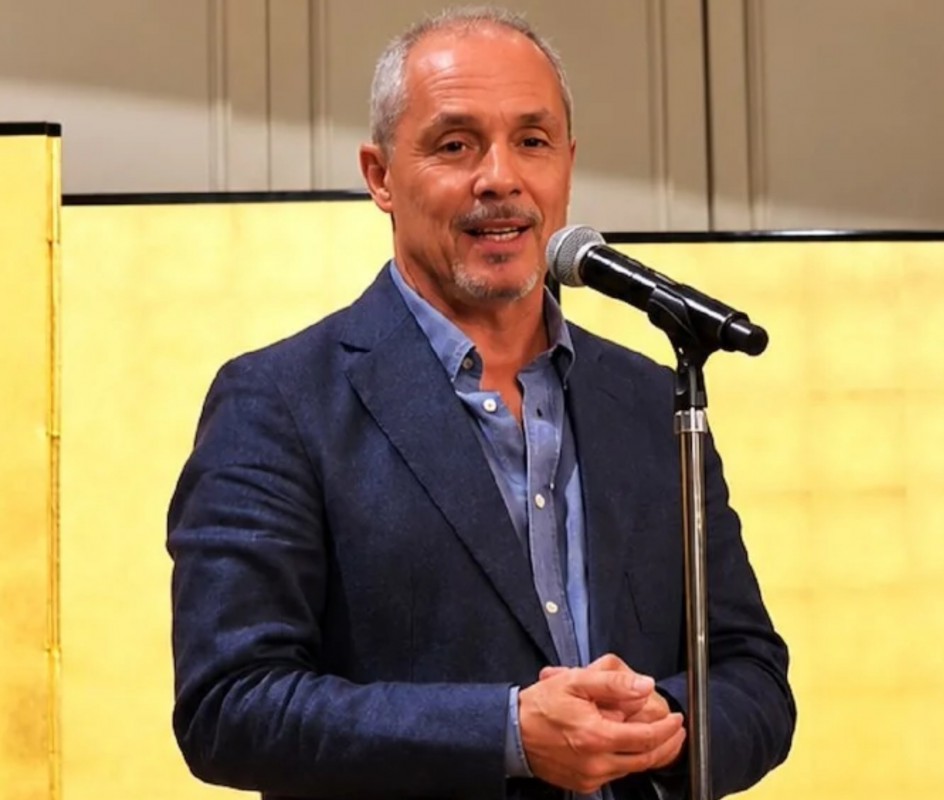
Luís Carlos, a professor in the Department of Physics and a researcher at CICECO – Aveiro Institute of Materials at the University of Aveiro (UA), has been elected chair of the International Advisory Board for the International Conference on Luminescence (ICL)—one of the longest-running international scientific conference series, dedicated to understanding light-emission processes and developing new materials.
The election took place in July 2026 during a virtual meeting of the international committee and was announced at ICL 2026, held in Kyoto, Japan. Luís Carlos formally assumed his duties at the conclusion of the conference, succeeding Daniel Jaque of the Autonomous University of Madrid, Spain.

Luminescence is the phenomenon by which a material emits light after receiving energy—for instance, through the absorption of radiation, a chemical reaction, or an electric current—without the emission resulting directly from heating. It is present in everyday technologies, such as mobile phone and television screens and LED lighting, as well as in scientific applications ranging from optical sensors to biomedical imaging.
The scientific and technological significance of these phenomena is highlighted by two Nobel Prizes awarded in 2014: the Nobel Prize in Physics, for the development of efficient blue LEDs, which revolutionized lighting; and the Nobel Prize in Chemistry, for the development of super-resolution fluorescence microscopy, which enabled the observation of cellular structures in unprecedented detail.
A scientific community spanning generations
The tradition of these scientific meetings dates back at least to 1936, when the first international conference dedicated to photoluminescence was held in Warsaw, Poland. The current series of conferences was institutionalized in Budapest in 1966 with the creation of a permanent international committee, tasked with ensuring the continuity of the meetings and guiding their scientific direction.
Every three years, the ICL brings together researchers from around the globe who seek to understand how and why materials emit light, and to explore the possibilities this knowledge offers for the development of new technologies. More than just a succession of scientific gatherings, the conference has become a space for sharing knowledge, forging lasting relationships, and renewing an international scientific community.
Throughout its history, the international committee has been chaired by Ferd Williams (University of Delaware, USA), Donald McClure (Princeton University, USA), William M. Yen (University of Georgia, USA), Georges Boulon (Université Claude Bernard Lyon 1, France), Andries Meijerink (Utrecht University, Netherlands), and Daniel Jaque (Universidad Autónoma de Madrid, Spain).
For Luís Carlos, the committee’s primary mission is deeply rooted in this historical tradition. In his view, "the concept of community has been present in the ICL since its inception." He notes that, beyond simply ensuring the conference takes place every three years, "our main purpose is to preserve and strengthen this international scientific community."
"Across several generations, the ICL has served as a venue for meeting, sharing knowledge, and building enduring scientific and personal relationships. We want to perpetuate this sense of belonging, ensuring that new generations of researchers see themselves as part of this history and contribute to its continuation," says Luís Carlos.
Continuity and renewal of the scientific community
As chair of the international committee, Luís Carlos will be responsible for coordinating the international body that oversees the scientific organization of successive ICL editions, promotes the participation of the global scientific community, and helps define the future direction of the conference. The next edition of the ICL will take place in Madrid, Spain, in 2029, marking the first to be held during Luís Carlos’s term as president of the international committee.
This election strengthens the UA’s international presence within a scientific community that, for several decades, has contributed to advancing knowledge about the processes governing light emission and to the development of new materials and technologies.
Related Articles
Researchers
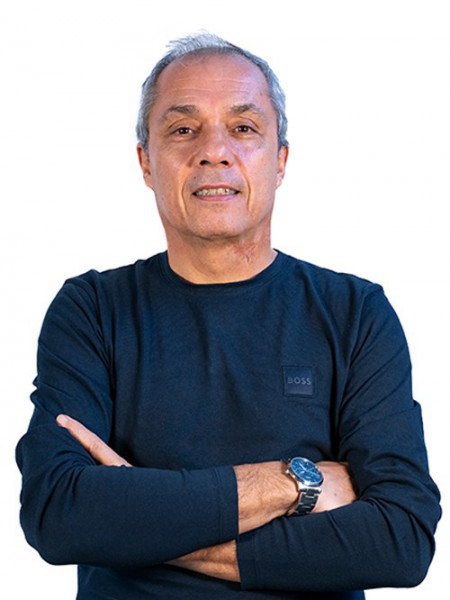
Luís Carlos
Full professorWe use cookies for marketing activities and to offer you a better experience. By clicking “Accept Cookies” you agree with our cookie policy. Read about how we use cookies by clicking "Privacy and Cookie Policy".