

abstract
This research presents a series of PMMA thin layers (labelled Ln_PMMA, where Ln = Eu3+, Tb3+, Sm3+, Dy3+) with high overall emission quantum yields of QLEu = 85%, QLTb = 66%, QLSm = 3%, and QLDy = 6% with introduced lanthanide (Ln3+) coordination compounds of the type [Na2LnL4(OTf)(DMF)] (where L = N-(diphenylphosphoryl)-pyrazine-2-carboxamide, OTf = [CF3SO3]-, DMF = N,N-dimethylformamide). This is the first analysis comparing the photophysical properties of coordination compounds encapsulated in PMMA with single crystals, which includes the influence of factors such as the inhomogeneity of the Ln3+ coordination polyhedra and the refractive index. A model is proposed to estimate the change in QLLn when the Ln chelate is incorporated into a PMMA medium, and it satisfactorily reproduces the experimental data with a maximum absolute error of 3% for the case of Eu3+ samples. At the same time, our work shows the influence of the PMMA matrix on the photophysical properties of Ln3+ with large (Eu, Tb) and small energy gaps (Sm, Dy) between the emitting levels and adjacent levels with lower energy. QLLn for coordination compounds introduced into PMMA decreases relative to single crystals by about 10% for Eu3+ and Tb3+ as well as by about 70% for Sm3+ and Dy3+ for which emitting levels are quenched by the electron-phonon coupling presented by the vibrational modes of the PMMA matrix. Ln_PMMA thin layers containing a mixture of Eu3+, Tb3+, Sm3+ and Dy3+ coordination compounds are characterized by multicolor tunable emission.
keywords
LANTHANIDE COMPLEXES; ENERGY-TRANSFER; PHOTOPHYSICAL PROPERTIES; LUMINESCENT; FILMS; LIGAND; SERIES; STATE
subject category
Materials Science; Physics
authors
Lipa, A; Pham, YH; Neto, ANC; Trush, VA; Li, HR; Malta, OL; Amirkhanov, VM; Gawryszewska, P
our authors

Albano Neto Carneiro Neto
Junior ResearcherProjects
CICECO - Aveiro Institute of Materials (UIDB/50011/2020)
CICECO - Aveiro Institute of Materials (UIDP/50011/2020)
Associated Laboratory CICECO-Aveiro Institute of Materials (LA/P/0006/2020)
Other
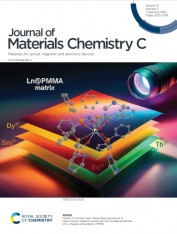
Cover
Mediaacknowledgements
The authors thank the University of Wroclaw for supporting these investigations and Dr W. Wrzeszcz for the photos in Fig. 1. This work was developed within the scope of the project CICECO-Aveiro Institute of Materials, UIDB/50011/2020, UIDP/50011/2020 & LA/P/0006/2020 and LogicALL (PTDC/CTMCTM/0340/2021) financed by Portuguese funds through the FCT/MEC (PIDDAC).