abstract
Growing interest in sustainable and efficient metal ion separation has led to the exploration of non-ionic deep eutectic solvents (DESs), also known as type V DESs, as promising alternatives to conventional organic phases in solvent extraction (SX). This work summarizes recent developments, focusing solely on the use of non-ionic DESs and excluding ionic DESs, for the separation of metal ions from synthetic and real leachates. The review does not aim to exhaustively cover all studies but focuses on the molecular mechanisms of SX, how inherent properties of DESs influence these mechanisms, and how they can be harnessed to improve the separation selectivity. It further highlights the physico-chemical properties of DESs in SX and compares them with traditional systems, emphasizing similarities and new opportunities. The overall aim is to clarify the potential and limitations of type V DESs in SX, including their often touted credentials as "green solvents", and to offer guidelines for their practical use and addressing skepticism towards novel solvents in hydrometallurgy.
keywords
DEEP EUTECTIC SOLVENTS; TRIOCTYLPHOSPHINE OXIDE TOPO; INTERFACIAL PROPERTIES; WEAK-INTERACTIONS; REVERSE MICELLES; ORGANIC LIQUIDS; SEPARATION; MIXTURES; WATER; ACID
subject category
Chemistry; Science & Technology - Other Topics
authors
Schaeffer, N; Vaz, ICM; Pinheiro, MS; Olea, F; Hanada, T; Dourdain, S; Coutinho, JAP
our authors

Felipe Olea Chandía
Junior Researcher
Inês C. M. Vaz
Junior Researcher

Maísa Saldanha Pinheiro
PhD Student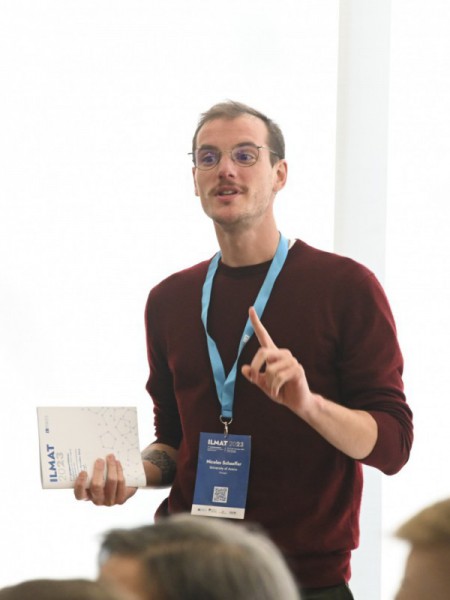
Nicolas Schaeffer
Assistant ResearcherProjects
CICECO - Aveiro Institute of Materials (UIDB/50011/2020)
CICECO - Aveiro Institute of Materials (UIDP/50011/2020)
Associated Laboratory CICECO-Aveiro Institute of Materials (LA/P/0006/2020)
acknowledgements
N.S. acknowledges the European Research Council (ERC) for the starting grant ERC-2023-StG-101116461. Views and opinions expressed are however those of the author(s) only and do not necessarily reflect those of the European Union or the European Research Council. Neither the European Union nor the granting authority can be held responsible for them. T.H. acknowledges support from the Environment Research and Technology Development Fund (JPMEERF20233002) and JSPS KAKENHI grant no. 23K19186. This work was partly developed within the scope of the project CICECO-Aveiro Institute of Materials, UIDB/50011/2020, UIDP/50011/2020 & LA/P/0006/2020, financed by national funds through the FCT/MEC (PIDDAC). The authors thank Monia A. R. Martins for the characterisation of the thymol + benzo-12-crown-4 ether SLE.