abstract
Melanoma, in advanced stages, is the most invasive type of skin cancer, with currently available treatments showing limited efficiency. The number of melanoma cancer cases is expected to increase in the coming years, emphasizing the need for more efficient therapeutic strategies. The present study aimed to evaluate the potential of beta-blockers, commonly used to treat cardiac conditions, to be repurposed for the treatment of melanoma. The effects of non-selective beta-blockers (carvedilol and propranolol), beta 1 selective blockers (atenolol and metoprolol) and antineoplastics drugs (cisplatin and 5-fluorouracil) on the A375 melanoma cell line were studied, individually and in combined exposures, by assessing cell viability over a 72 h period. The 72 h half-maximal inhibitory concentrations (IC(50)s) determined for A375 cells allow the ranking of toxicity as: cisplatin (2.46 (1.87-3.38) mu M) > 5-fluorouracil (4.77 (4.48-5.07) mu M) > carvedilol (16.91 (15.47-18.99) mu M) > propranolol (58.03 (57.08-59.11) mu M) > atenolol and metoprolol (beta 1 selective blockers that exhibited no significant effect on the cell's viability). The effects of combined exposures were also studied. Metoprolol and carvedilol exhibited synergistic interactions with cisplatin at specific concentrations. Overall, the data highlight the concentration-dependent nature of mixture effects and support the potential application of beta-blockers melanoma treatment.
keywords
CARVEDILOL; CANCER; 5-FLUOROURACIL; INHIBITION; GROWTH; RISK
subject category
Environmental Sciences & Ecology; Toxicology
authors
Rama, L; Almeida, M; Jose, J; Pereira, MD; Oliveira, M
our authors
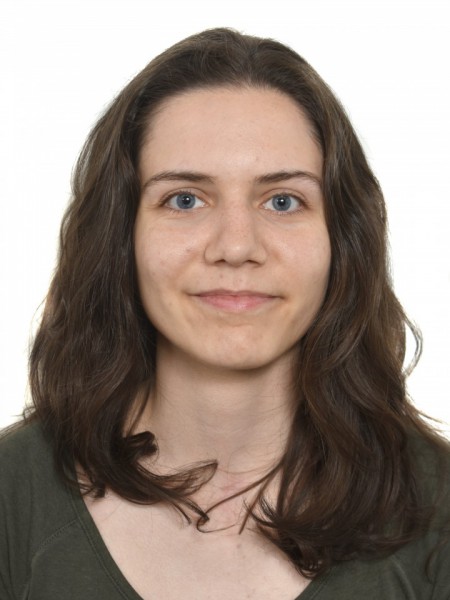
Laura Rama
PhD Student
Maria de Lourdes Gomes Pereira
Associate Professor with Aggregationacknowledgements
This work was funded by national funds through FCT-Fundac & atilde;o para a Ciencia e a Tecnologia I.P., under the project CESAM-Centro de Estudos do Ambiente e do Mar, references UID/50017/2025 (doi.org/10.54499/UID/50017/2025) and LA/P/0094/2020 (doi.org/10.54499/LA/P/0094/2020); and the project CICECO-Aveiro Institute of Materials, UID/50011/2025 (DOI 10.54499/UID/50011/2025) & LA/P/0006/2020 (DOI 10.54499/LA/P/0006/2020), financed by national funds through the FCT/MCTES (PIDDAC). Jiya Jose was supported by Rajagiri College of Social Sciences (Autonomous), Kerala, India, under Seed Money for Faculty Minor Research (RCSS/IQAC/BB-S59/2025/159). Laura Rama benefited from a PhD grant funded by the University of Aveiro with reference BI/REIT/11869/2024.