A PhD is a marathon that builds resilience, clarity of thought, and the ability to transform knowledge into impact.
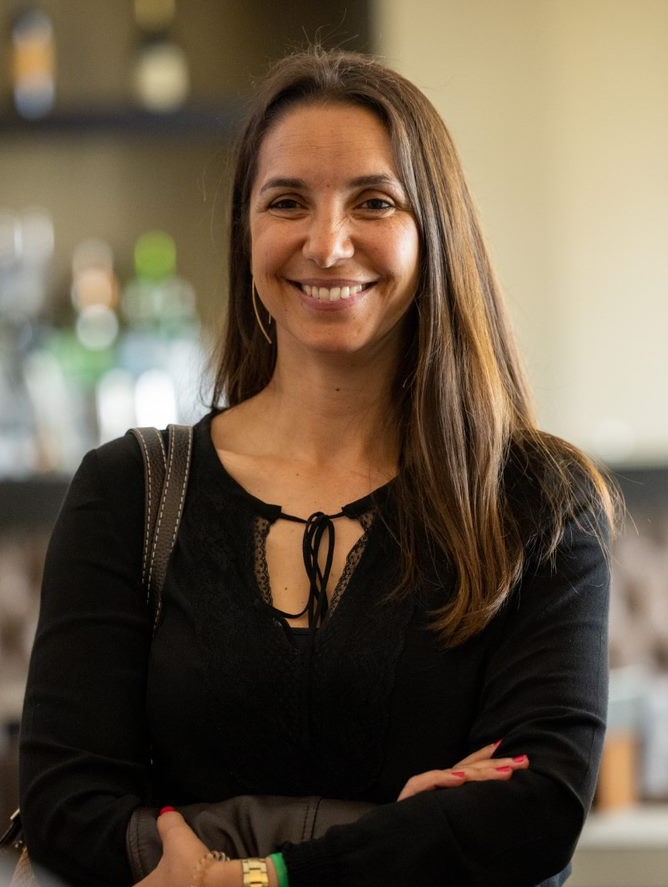
Sofia Margarida Costa Rebola holds a PhD in Chemical Engineering from the University of Aveiro and has more than 20 years of experience in the pulp and paper industry. Her professional trajectory spans laboratory work, process and product development, and leadership roles in Quality, Safety, Environment, and Continuous Improvement. Since 2022, she has served as Production Director at Celbi, in Figueira da Foz, with responsibility for pulp production and energy recovery operations.
She started my doctoral studies in 2017 and completed them in 2021 supervised by Professor Dmitry Evtuguin. Her research focused on the production of pulp for new applications.
Experience at CICECO and Life in Aveiro
During my doctoral studies in Aveiro, my experience at CICECO was intellectually stimulating and professionally transformative. The multidisciplinary environment allowed interaction with researchers from diverse scientific backgrounds, enriching my academic development. I strengthened my technical and analytical skills, deepened my scientific reasoning, and consolidated a rigorous approach to problem-solving.
Key highlights included collaboration with different research teams, exposure to advanced research methodologies, and the development of a solid scientific mindset that continues to influence my professional career.
Career Development After the PhD
Following the completion of my PhD, my professional career progressed significantly. I enhanced my expertise in research methodology, critical analysis, and data evaluation, while developing the capacity to propose robust and innovative solutions to complex technical and industrial challenges. These competencies have been instrumental in leadership and production management contexts.
Skills with Lasting Impact
The period at CICECO had a lasting impact on both my technical expertise and transversal competencies. Scientifically, I strengthened analytical and critical thinking abilities and adopted a rigorous approach to data analysis and evidence-based decision-making.
Equally important were the transversal skills developed during the doctoral journey: time and task management, autonomy, self-discipline, resilience, and the ability to collaborate within multidisciplinary teams. These skills have proven decisive in industrial management and leadership roles.
Advice to Current and Future Researchers
I advise future doctoral candidates to select a research topic that genuinely motivates them, as personal commitment is essential throughout the journey. The choice of supervisor is equally critical: effective communication, experience, availability, and engagement can determine the overall success of the doctoral experience.
A PhD should be regarded as a marathon rather than a sprint. Periods of uncertainty and reassessment are intrinsic to scientific work. Adaptability is often more valuable than attempting to control every variable. Maintaining personal balance is also essential, ensuring time for rest and personal relationships.
From a practical perspective, I recommend cultivating consistent writing habits throughout the PhD, including summaries, structured notes, draft chapters, and short papers. This approach significantly facilitates the final thesis preparation. Despite its challenges, a PhD remains a uniquely rewarding experience, fostering both scientific competence and personal growth.
A PhD is a marathon that builds resilience, clarity of thought, and the ability to transform knowledge into impact.