Take risks, accept failure as part of experimental work, and maintain transparency.
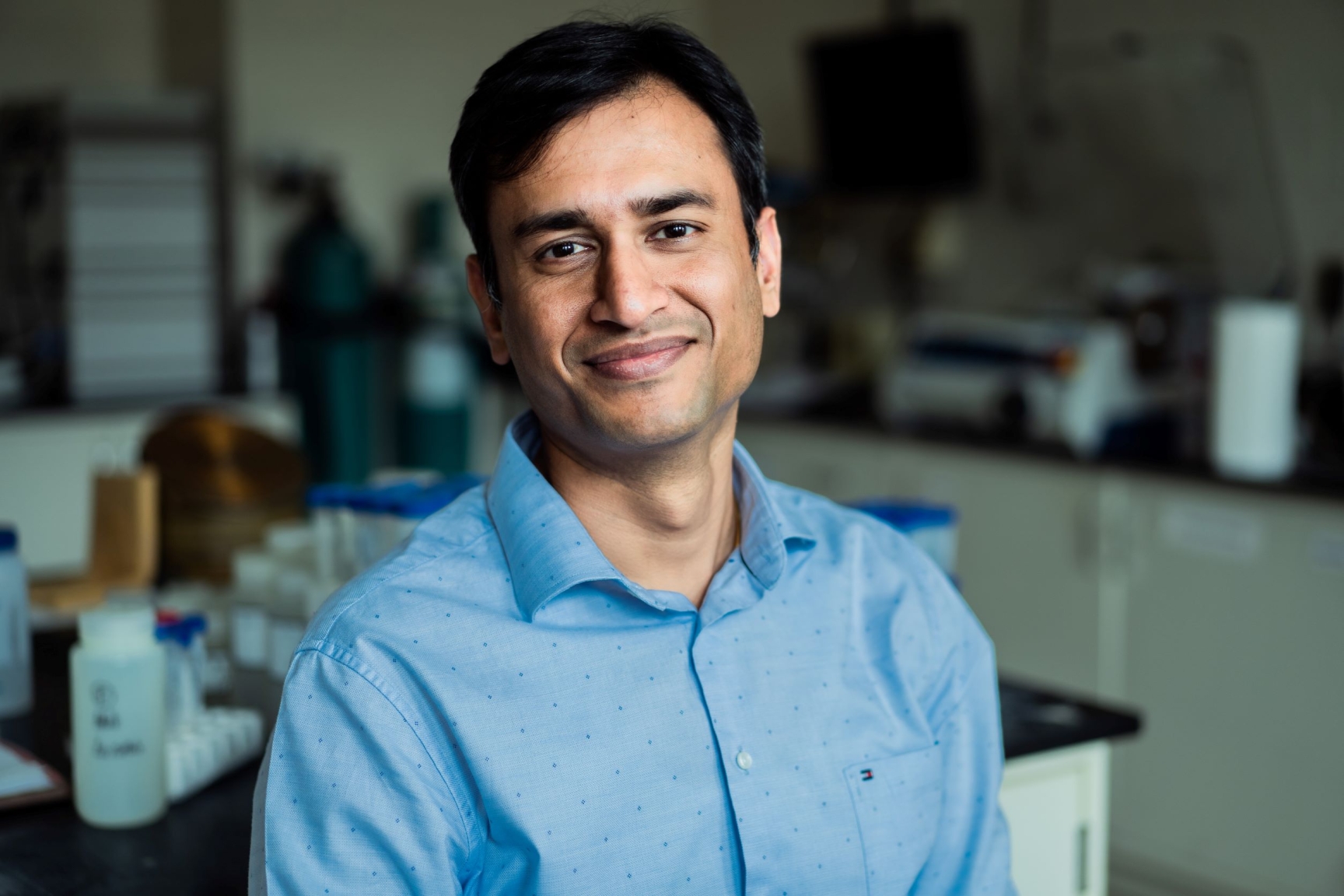
Ashutosh Goel is a Professor of Materials Science and Engineering at Rutgers University, the largest state university in New Jersey, USA. His investigation focuses primarily on glasses and glass-ceramics, and over the years he has become internationally recognised in this field.
Born and raised in the state of Punjab, in northern India, his academic journey took a decisive turn in 2005, when he moved to Portugal to pursue PhD at the Universidade de Aveiro under the supervision of José Maria Ferreira. “That decision reshaped my scientific and professional trajectory”, reflects Dr. Goel. He completed his PhD in 2009, supported first by a University of Aveiro fellowship and later by a fellowship from the Fundação para a Ciência e a Tecnologia (FCT), and in this he interview explains the stepping stones of his career path.
Aveiro: A Turning Point
Before arriving in Aveiro, I was enrolled in a PhD program in India that was not progressing as I had hoped. I felt intellectually constrained and increasingly frustrated. Presenting my master’s work at an international conference in December 2004 opened an unexpected door – a potential opportunity to work with Professor José Maria Ferreira. However, I never received any responses to my emails from Professor Ferreira.
After months of unanswered emails (now as a professor, I understand how hard it is to keep you with e-mails), in July 2005, I made a decisive phone call to Professor José Maria Ferreira. That moment required courage, but it changed my life. Within a month, I received an offer letter. In October 2005, I travelled abroad for the first time to begin my doctoral studies in Portugal.
Scientific Formation and Mentorship
My scientific foundations in glasses and glass-ceramics were built in Aveiro. In addition to Professor Ferreira, Dr. Dilshat Tulyaganov played a decisive role as a scientific mentor.
Through their guidance, I developed deep expertise in glass science, learned how to approach complex materials problems, and gained the confidence to position myself internationally in the field.
Discipline, Integrity, and the Value of Time
Beyond scientific knowledge, I learned principles that shaped my professional identity. One of the most important lessons I absorbed was the importance of discipline and punctuality.
As I often say, “If you promise to be there at 11:55, you must be there at 11:54.”
From Professor Ferreira, I learned what it means to be a person of one’s word. Respect for time is not symbolic; it reflects respect for people, for commitments, and for research itself. This principle remains central to how I conduct my laboratory and professional life.
Freedom to Collaborate and Intellectual Autonomy
During my PhD, I was never restricted in choosing collaborators. I was encouraged to engage with different laboratories and researchers, regardless of institutional dynamics.
This freedom taught me the strategic value of collaboration and the importance of intellectual autonomy. Today, I extend the same independence to my own students. I believe research advances when researchers are allowed to explore beyond predefined boundaries.
Leadership Philosophy and Mentorship
As a professor at Rutgers University since 2014, I have led a research group comprising postdoctoral researchers, Ph.D., M.S., and undergraduate students. My leadership model reflects the principles I learned in Aveiro.
I encourage my students to take risks, to accept failure as part of experimental work, and to maintain transparency. Mistakes in the laboratory are inevitable; dishonesty is not acceptable. I prioritize safety, accountability, and intellectual growth.
The success of my former students, many of whom remain in contact, is one of the most meaningful indicators that this approach works.
Advice to Current and Future Researchers
Based on my experience, I offer six central recommendations to young researchers:
- Avoid linear thinking. Research rarely follows a straight path.
- Take intellectual risks. Failure is instructive and often necessary.
- Do not take a fellowship for granted. A funded PhD is a privilege and an opportunity for you to build your career. Use this opportunity wisely.
- Develop independence early. Do not wait to be told every step.
- Build international collaborations whenever possible.
- Protect your integrity and respect time; these qualities define long-term credibility.
Aveiro became my second home. The training, discipline, and scientific formation I received there laid the foundation for everything I have achieved since.
Without that opportunity, my professional trajectory would have been entirely different. My role today as a professor and research leader is, in many ways, a continuation of what began in 2005. In the end, Aveiro did not simply offer me a doctoral degree, it provided a platform for global scientific leadership.
Take risks, accept failure as part of experimental work, and maintain transparency.