Don’t just aim for the summit—enjoy the climb, the small victories, and the people you meet along the way.
After completing my Master’s degree at the University of Aveiro, I pursued a PhD in Engineering Physics at the Department of Physics, conducting my research as part of the CICECO – Aveiro Institute of Materials program under the supervision of Professor Vítor Amaral. My research combined Perturbed Angular Correlation (PAC) nuclear spectroscopy with Density Functional Theory (DFT) simulations to study graphene. I spent most of my PhD at CERN in Geneva, Switzerland, where the required nuclear isotopes were produced and the experiments conducted. In 2015, midway through my PhD, I signed a dual PhD agreement with KU Leuven in Belgium, establishing a joint doctoral program. After completing my PhD in 2018, I remained in Switzerland, where I currently live and work in the industrial sector.
First Steps into Science and Life in Aveiro
I began my PhD by completing the mandatory coursework at the University of Aveiro and then moved to CERN, Geneva, to continue my research. Every three months, I returned to Portugal to meet with my supervisor and review the progress of my work. I have vivid memories of the scientific meetings with colleagues, researchers, and professors at both the Physics Department and CICECO, particularly for the welcoming environment that encouraged the collaboration.
This period marked the beginning of my scientific journey, with CICECO playing a pivotal role in shaping my career—especially through the mentorship of Professor Vítor Amaral, who fostered my passion for research and profoundly influenced both my personal and professional development. Aveiro is a beautiful city, and my time there as a student and young researcher was filled with unforgettable memories and friendships.
A Leap into Industry and New Horizons in Switzerland
Although my original intention was to return to Portugal—specifically to the University of Aveiro—after completing my PhD, life had other plans. I stayed in Switzerland and decided to explore opportunities in industry. Right after finishing my PhD, I secured an internship with a company in the power generation sector. That experience not only opened the door to an industrial career as a physicist in research and development but, at the same time, allowed me to maintain active collaborations with CERN and CICECO, ensuring the completion of ongoing projects.
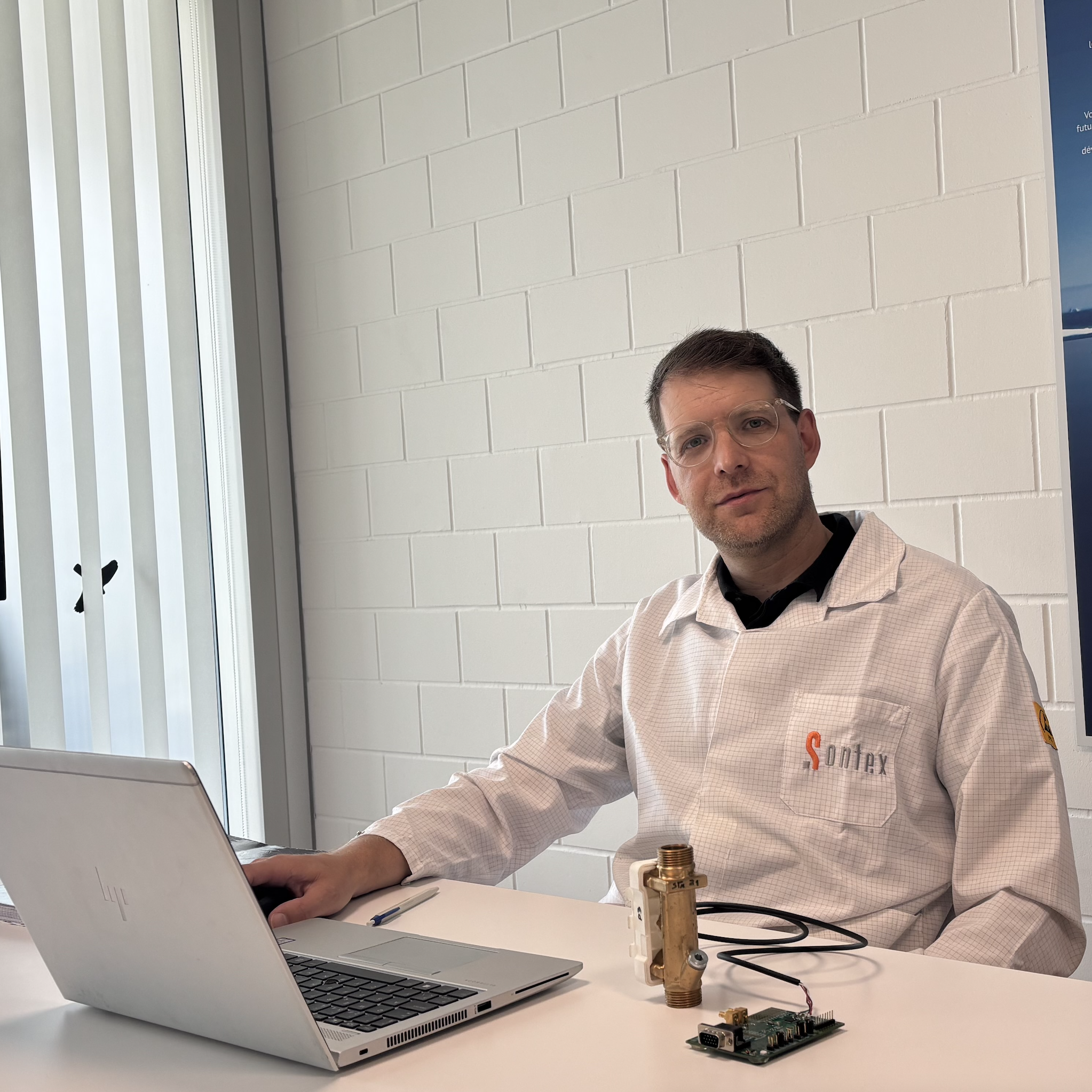
Since then, I have worked in several companies across diverse sectors, including power generation and energy storage, watchmaking, and, most notably, high-tech industries, expanding my work beyond the scope of my doctoral research and continuously broadening my skill set. Currently, I am working at Sontex SA, on the development of innovative thermal energy and fluid flow measurement systems, contributing to positioning the company at the forefront of metrology.
Lessons from CERN: Skills Beyond Physics
On a technical level, working at CERN provided daily exposure to cutting-edge technologies and world-class research facilities. This unique environment allowed me to work alongside leading experts from diverse backgrounds and institutions, greatly enhancing my technical and scientific perspective. Interacting with people from different cultures and academic backgrounds strengthened my communication and interpersonal skills—abilities that continue to shape my professional and personal life today.
While studying Physics, the true value of my PhD at CERN lay in its holistic development—offering not only rigorous technical training but also fostering personal growth through a range of challenging experiences.
Keeping Ties with CICECO and Beyond
I remain as an external collaborator of CICECO and I am involved in some ongoing projects—although time is often limited. I hope to continue the collaboration and contribute in the future.
While my research focused on a very specific area—graphene and 2D materials studied through nuclear techniques—the PhD equipped me with a broad set of transferable skills. This foundation allowed me to transition into fields such as data science and artificial intelligence. The skills, mindset, and adaptability developed during the PhD open doors and provide the versatility to navigate and succeed in whatever challenges lie ahead.
Lessons from the Research Journey
If you’re passionate about science and technology, be dedicated and persistent. Working in research is challenging and demanding, but also immensely rewarding. Embrace every step of the journey. Don’t just aim for the summit—enjoy the climb, the small victories, and the people you meet along the way.
A PhD is not just about achieving technical goals—it is a preparation for life. The program evolves constantly, requiring adaptability and resilience. Along the way, opportunities arise—not only technical, but also personal and professional.
Don’t just aim for the summit—enjoy the climb, the small victories, and the people you meet along the way.