Honesty and openness are essential for building strong collaborations and achieving long-term scientific success.
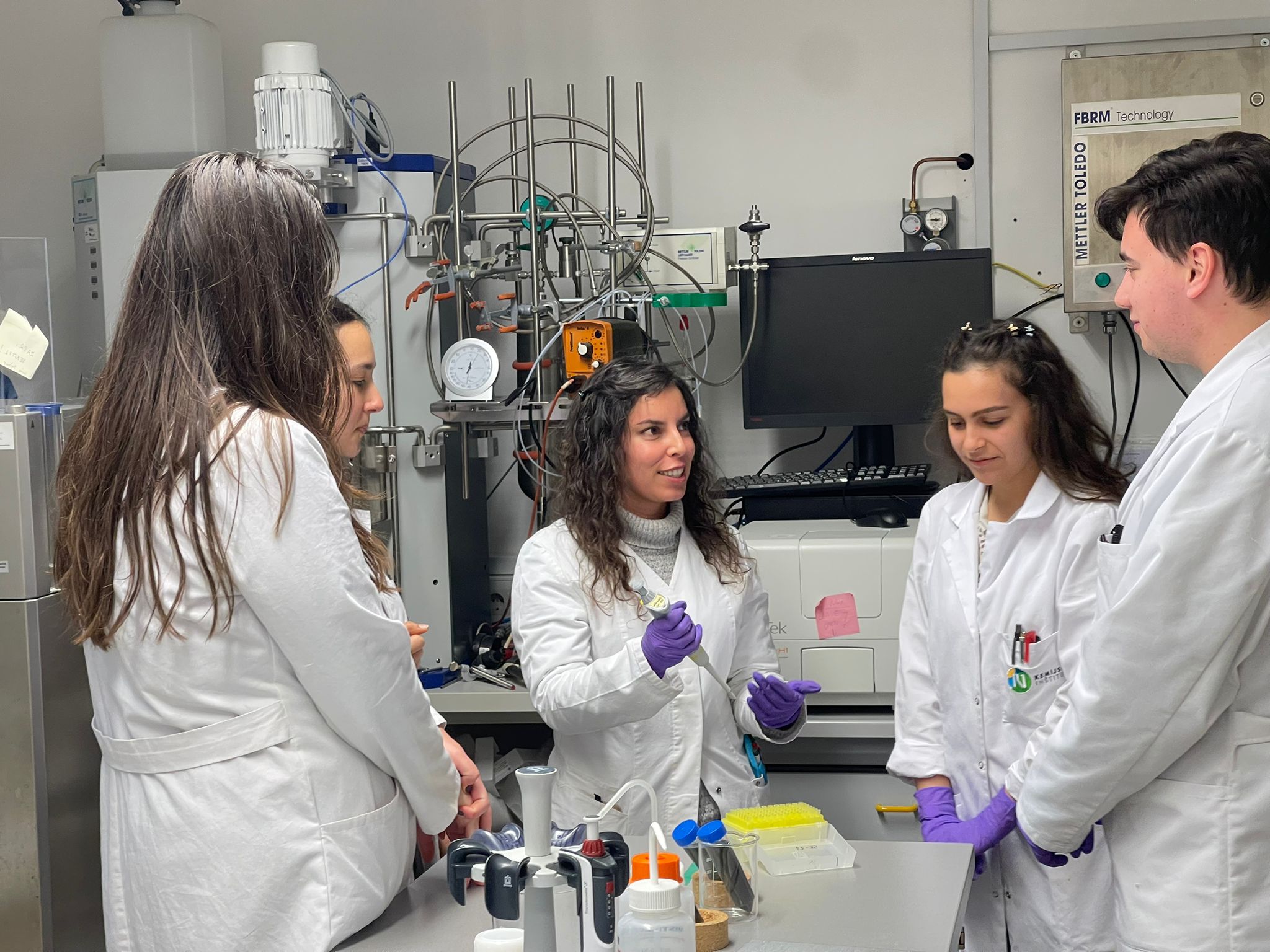
Filipa Vicente is a Research Assistant Professor at the National Institute of Chemistry (NIC) in Ljubljana, Slovenia, where she leads the Process and Product Engineering for the Pharmaceutical and Food Industry group within the Department of Catalysis and Chemical Reaction Engineering.
Early Research Career
I joined CICECO in 2012 for my undergraduate project in Professor João Coutinho"s group (PATh), working with Professor Coutinho and Mara Freire on the development of more sustainable downstream processes. This was the first decisive moment in my career. During this period, I worked closely with Jorge Pereira, who was a doctoral student at the time, and with Mara. Through this experience, I had my first contact with the real research environment and it was then that I realized I wanted to continue my academic studies and pursue a doctorate.
After completing my undergraduate degree and starting my master"s program, I remained actively involved with the PATh group, initially as a volunteer and later during my master"s thesis. At this stage, I began working with Sónia Ventura and developed my master"s thesis at the Faculty of Pharmaceutical Sciences of the University of São Paulo (Brazil), in collaboration with Professor Adalberto Pessoa Júnior. This was followed by a brief research grant in a national project and, subsequently, my doctorate in Chemical Engineering, under the supervision of Sónia Ventura and Professor João Coutinho.
Formative Years in Aveiro
My experience at CICECO was truly formative, both professionally and personally. It was where I built the foundations of my scientific identity and learned standards that I still apply today, including work ethic, professionalism, leadership, critical thinking, and scientific integrity. I also learned the importance of collaboration and networking, as well as communicating research effectively and presenting results in a clear, rigorous, and impactful way.
In personal terms, Aveiro became a second home. I made lifelong friends and gained what I still consider my PATh family. The highlight of this period was the scientific environment, the mentorship, and the friendship, starting with Professor João Coutinho, who remained a mentor and friend, and extending to Jorge, Mara, Sónia, Ana Paula, Mónia, Pedro, Tani, and many others who shaped my professional and personal development.
Professional career in research
Even before defending my doctorate, I had already secured the start of my current position at the National Institute of Chemistry (NIC), where I began a month after the defense. I joined as an Assistant Research Professor and, two years later, I was appointed group leader, focusing on more sustainable downstream processes for the production of high-value compounds with applications in various industries, particularly food, cosmetics, and pharmaceuticals.
After six years working at NIC, I was offered a permanent contract. Today, in addition to leading my research group, I am the principal investigator of several national and international projects, including projects within the Horizon Europe program, and I am also responsible for laboratory safety.
A career with transversal skills
My time at CICECO strongly shaped my work ethic, critical thinking, scientific integrity, and leadership skills, which continue to influence my approach to research today. I also learned that honesty and transparency, coupled with professionalism and teamwork, are essential for building strong collaborations and achieving long-term scientific success.
What advice do you have for future researchers?
Don"t view your PhD or postdoctoral studies at CICECO simply as a job. It will shape you in ways that go far beyond technical skills. It will be demanding, and there will be times when you will want to give up, but persistence makes all the difference. It develops resilience, independence, and confidence. Most importantly, remember that science is a team effort. Your strength is directly proportional to the strength of the people you work with, and you will go much further in a friendly, welcoming, and positive environment. Last but not least, enjoy the process, not just the results!
Honesty and openness are essential for building strong collaborations and achieving long-term scientific success.