Things don't always go well. It allows us to fail and solve problems from a different perspective, adapting human and physical resources and making us more flexible.
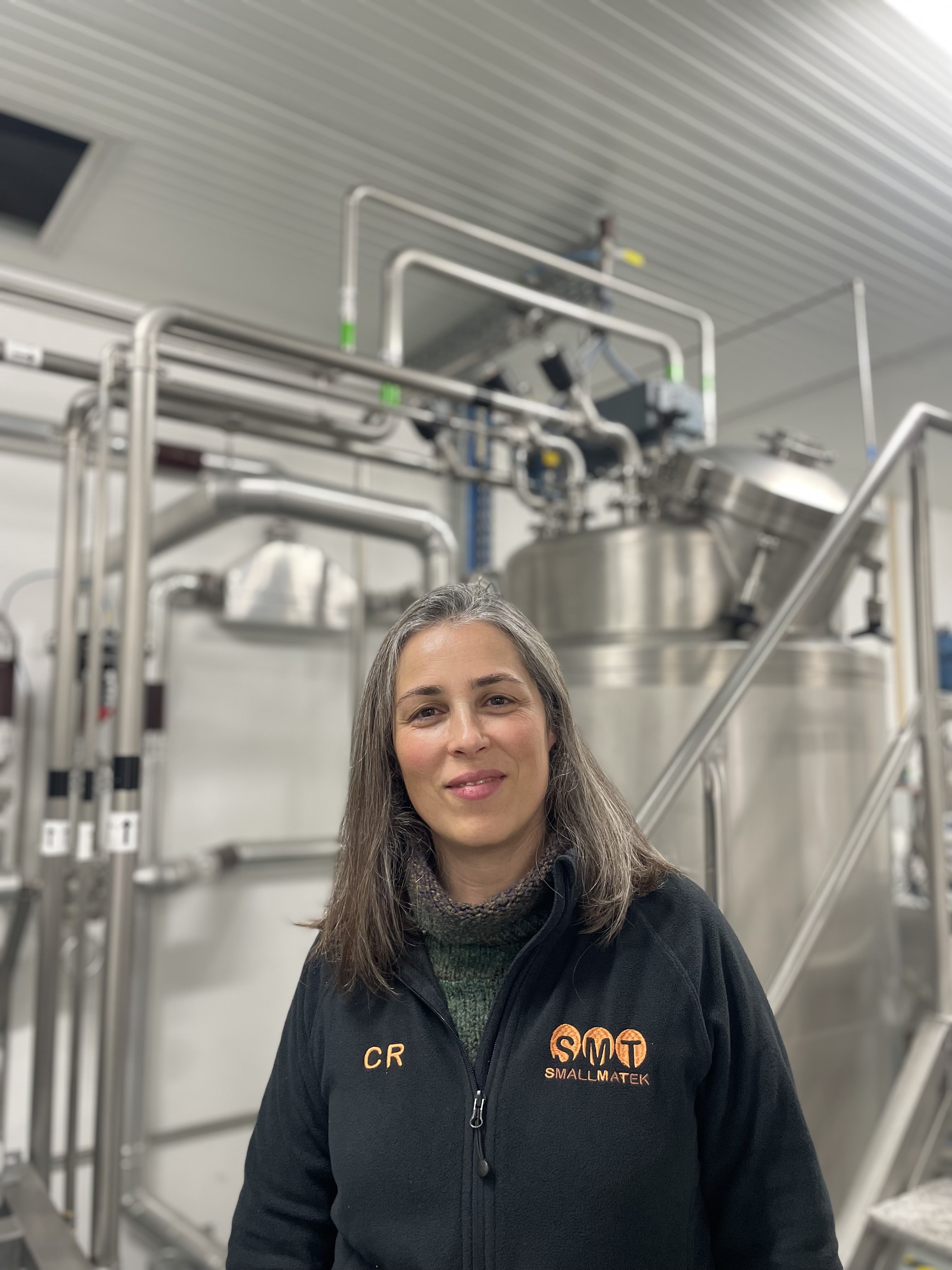
Cláudia Manuela Mesquita da Rocha works at Smallmatek, Lda, in Aveiro, a company dedicated to the production and development of nanostructured materials with multiple applications. Currently, she is responsible for Quality Management and Occupational Health and Safety at the company.
PATH OF SCIENCE EXCELLENCE
I started working at CICECO in 2008 with a scientific research grant, studying the metabolomics (simply put, multivariate metabolite analysis) of lung cancer using nuclear magnetic resonance (NMR).
In January 2010, I began my PhD in the same field, under the supervision of Dr. Iola Duarte. My work was part of the Metabolomics group led by Professor Ana Gil, where this strategy was applied to the study of food matrices, maternal-fetal diseases, cancer, among other subjects.
My thesis was defended on December 19, 2014, I still remember, with the theme “Metabolic signature of lung cancer: a metabolomic study of human tissues and biofluids”.
PHD HIGHLIGHTS AND TAKEAWAYS
I moved to Aveiro when I started working at CICECO in 2008, and the adaptation was very easy. The city is perfect for those who like the balance between nature, water, and some city hustle and bustle (in just the right measure). On the other hand, integration into the group and the laboratory went beautifully. I found colleagues who became friends, and together we formed a cohesive group, both in personal and academic development.
I learned and grew a lot in this environment; the technical conditions were favorable to the innovative research we did, the topic was very challenging, and the guidance I received was also very important for my growth.
PROFESSIONAL JOURNEY INTO NANOSTRUCTURES
Back in 2014, I started working at a company in Aveiro, Smallmatek, Lda, dedicated to the development of nanostructured materials with different applications. The beginning was challenging, as I came from a more analytical area and discovered the field of applied materials. But I quickly realized that all the skills I acquired during my doctorate could be applied in any context. Currently, I am more dedicated to the areas of Quality, Occupational Safety, and Regulation.
SKILLSET ACQUIRED DURING THE CAREER
During a period when someone dedicates themselves so deeply to a topic, as in their doctorate, the development of personal skills is often more relevant than the research itself. That is, in my perspective, the doctorate served primarily for my personal development.
The challenge of completing a doctorate over 4 years allows one to deepen their critical thinking, so important in any aspect of their life. On the other hand, and because things don't always go well, it allows us to fail and solve problems with a different perspective, adapting human and physical resources, making us more flexible. This growth process isn't easy, but in the end I believe we are better prepared for the future.
AN ADVICE FOR THE FUTURE GENERATIONS
You've probably heard this many times: being a researcher is a demanding profession, but it can be very rewarding. The constant challenges are an opportunity to expand knowledge and assimilate new learning. Being a researcher broadens our horizons, and that's a gift.
However, the most important thing is to maintain the right personal and professional balance for each of us.
Things don't always go well. It allows us to fail and solve problems from a different perspective, adapting human and physical resources and making us more flexible.