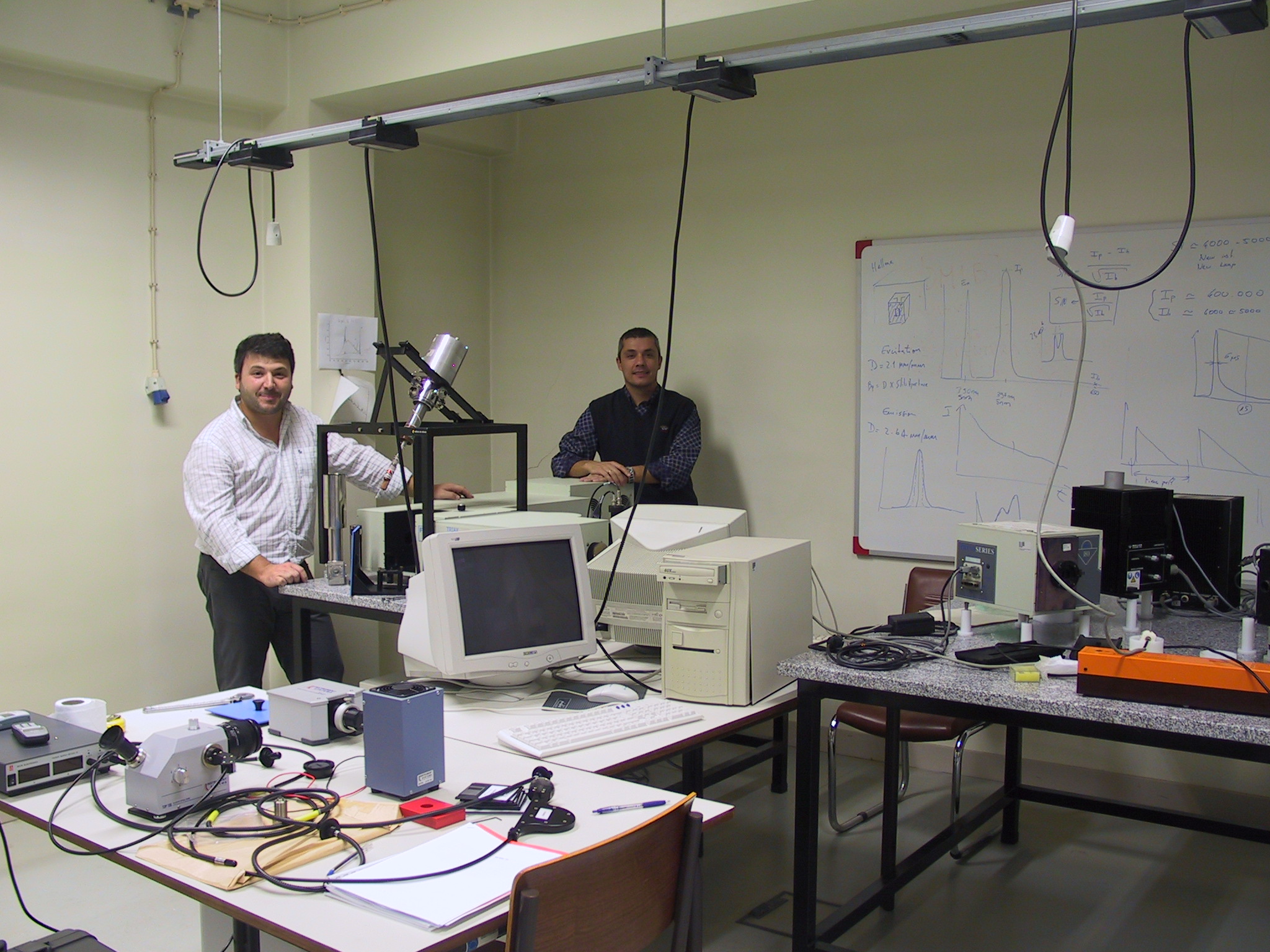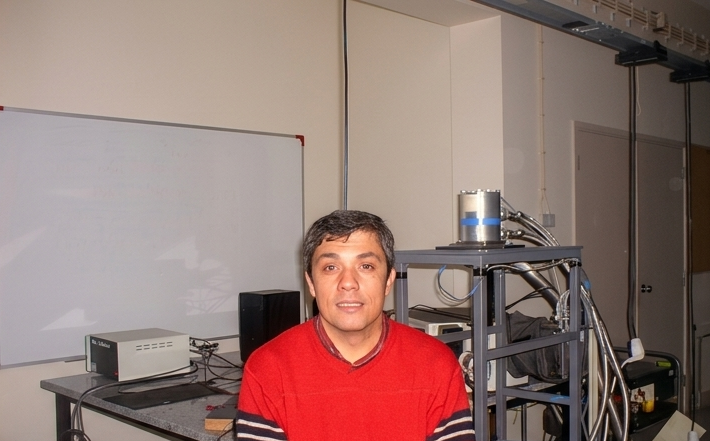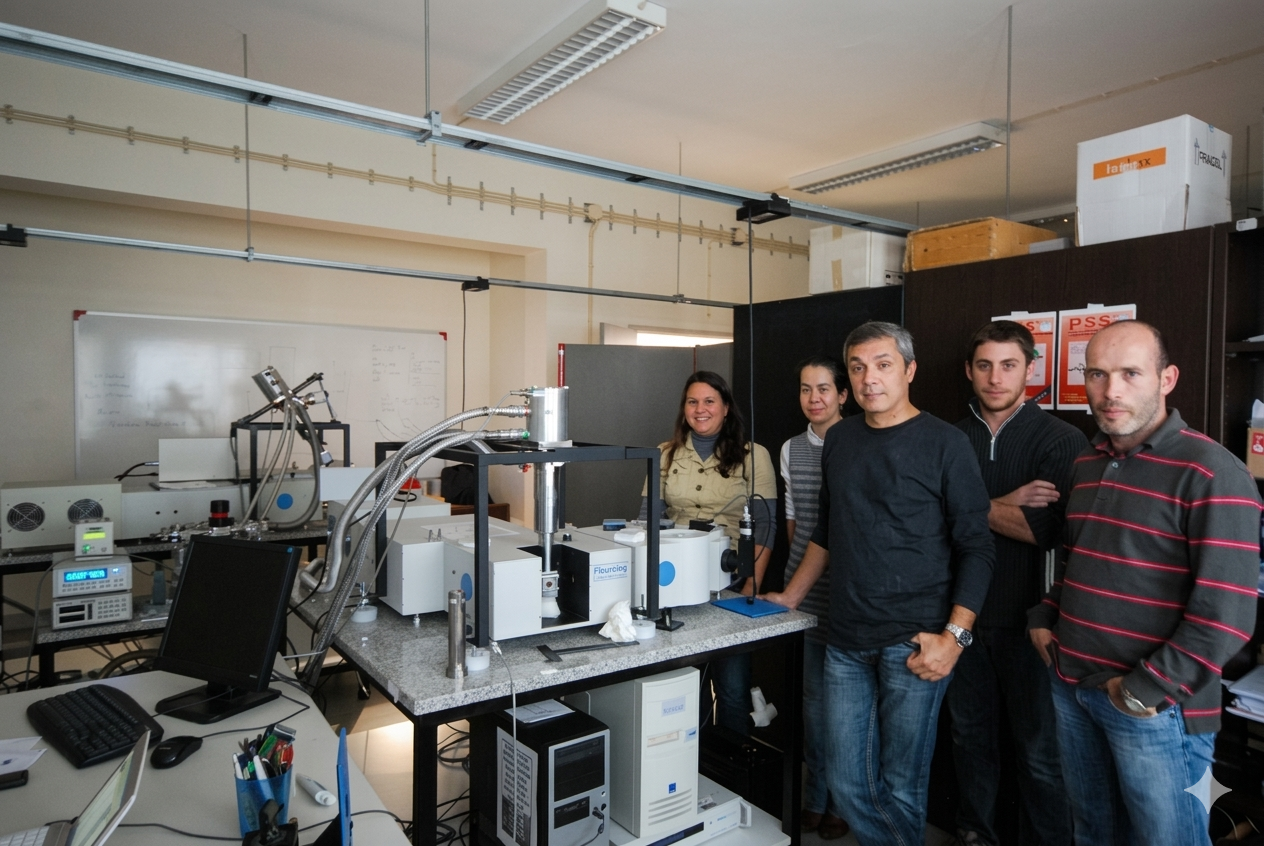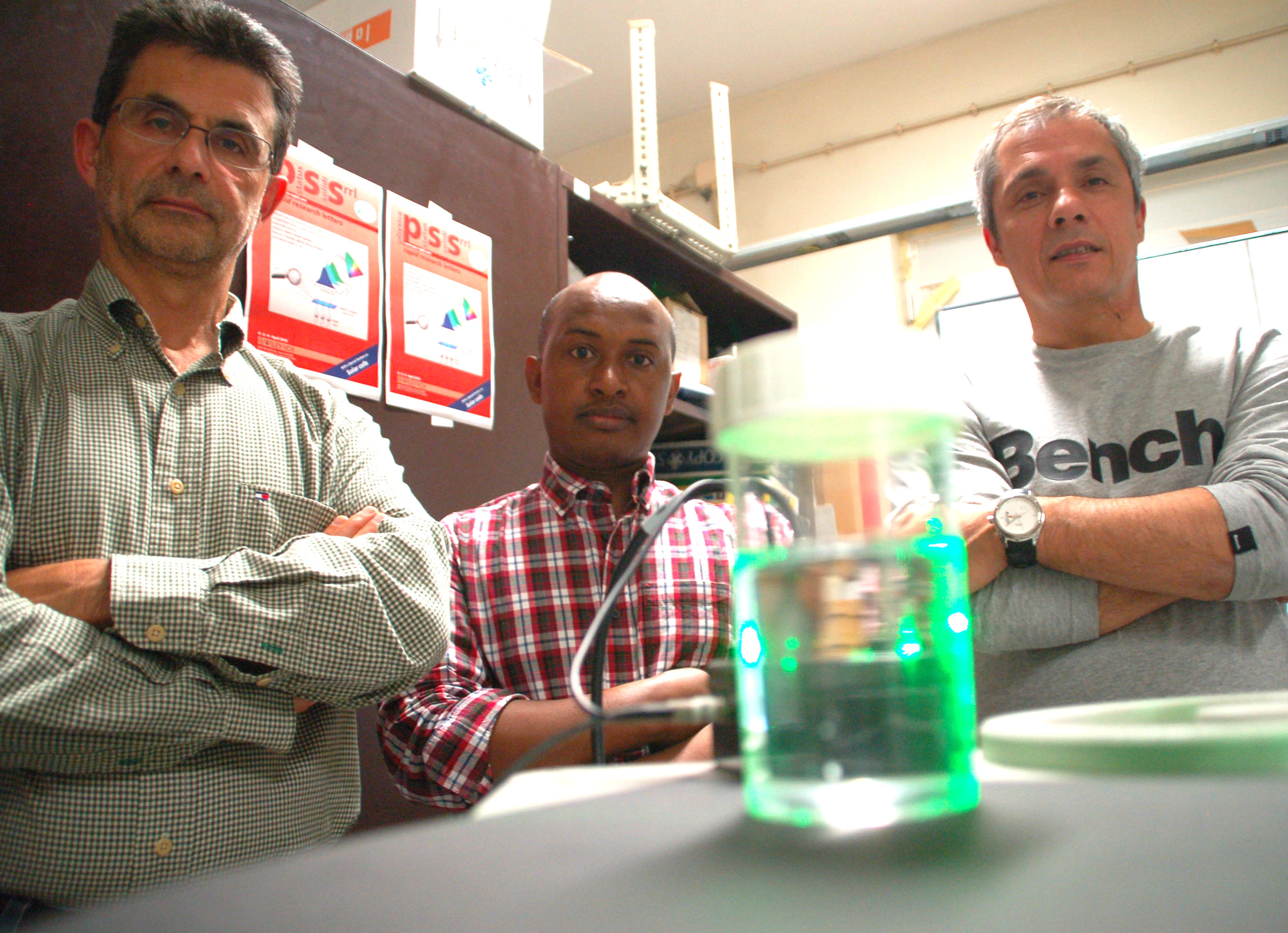

Professor Luís Carlos has been shaping photonics and materials science at the University of Aveiro for nearly three decades. From his early work on lanthanide-based polymer electrolytes to pioneering luminescence nanothermometry, his trajectory reflects the international consolidation of functional luminescent materials and nanoscale optical sensing. At CICECO, his work has contributed to establishing luminescent materials and hybrid photonic systems as core research areas, reinforcing the institute’s international visibility and collaborative network.
Your scientific career began with photoluminescence studies of polymer electrolytes incorporating lanthanide salts. Looking back, which intellectual questions or formative experiences most decisively shaped your long-term research trajectory?
Looking back, one of the most decisive influences on my scientific trajectory was meeting Professor António Leite Videira during my doctoral years at the University of Évora. He was a brilliant professor with exceptional intellectual breadth, a strong sense of ethics, and deep knowledge of physics. Although his research focused on General Relativity, far removed from my own work at the time on photoluminescence in lanthanide-containing polymers, his intellectual influence proved decisive.
Rather than concentrating on technical aspects of my work, he taught me something far more important: how to think critically. He encouraged me to question assumptions, scrutinise what we write, and challenge our own interpretations. Although I only scratched the surface of what he taught me, this habit of intellectual inquiry became central to my approach to research.
This mindset has continued to shape how I approach scientific questions throughout my career.
Which scientific breakthroughs, leadership roles, or strategic choices proved most decisive in redirecting or amplifying the impact of your work?
A recurring element in many of the decisions I made throughout my career has been a curiosity for scientific questions that had not yet been widely explored. I have often been drawn to areas where the literature was limited and key aspects of the problem remained open.
When I began my PhD, for example, there was only one published paper addressing the photoluminescence of polymer electrolytes incorporating lanthanide salts. Polymer electrolytes were widely studied as ionic conductors, but their luminescent properties had received little attention. Later, when I moved to organic–inorganic hybrid materials doped with lanthanide ions, only a few examples had been reported, leaving many aspects of the underlying photophysical processes still unexplored.
A similar opportunity emerged in luminescence thermometry, where we were among the first to explore using light-emitting nanomaterials as temperature probes. More recently, this perspective has guided our work using upconverting nanoparticles to study the anomalous behavior of liquid water in its hydration layer.
This approach also allowed us to remain scientifically competitive with relatively modest resources. When the scientific questions are well chosen, careful reasoning and well-designed experiments can compensate for the absence of large teams, sophisticated instrumentation, or substantial funding.
In many respects, these choices were less the result of a strategic plan than the natural consequence of following scientific questions wherever there was still something to understand.
You are widely regarded as a pioneer in luminescence nanothermometry. How did this research line emerge, and what conceptual or methodological breakthroughs allowed it to evolve into a consolidated field with applications ranging from nanoarchitectures to bioimaging?
Luminescence nanothermometry emerged naturally from our long-standing interest in lanthanide spectroscopy and from the broader curiosity for unexplored scientific questions that has guided much of our work. The temperature dependence of lanthanide emission had been known since the 1960s, but had mainly been explored from a spectroscopic perspective. A turning point came when we considered applying this phenomenon to molecular and nanostructured materials to measure temperature locally.
Our first paper on the subject initially faced scepticism. Submitted to Applied Physics Letters in 2001, one reviewer questioned the need for a thermometer based on lanthanide complexes when inexpensive thermocouples already existed. The point, however, was not to replace conventional thermometers but to enable remote and spatially resolved temperature measurements at micro- and nanoscales where traditional methods fail. The work was later published in Advanced Functional Materials. These early studies helped demonstrate that luminescent molecular and nanoscale systems could function as reliable thermometric probes and contributed to opening a research direction that was later developed by many groups worldwide.
The well-defined energy-level structure of lanthanide ions, particularly the thermally coupled levels, enables direct extraction of temperature from luminescence signals. Combined with advances in molecular systems and luminescent nanoparticles, this opened the way to probing temperature in nanoarchitectures, soft matter, and biological environments.
Over time, conceptual advances, including figures of merit, improved calibration methods, and new nanomaterials, helped transform this idea into a consolidated research field. Today, luminescence nanothermometry is used in applications ranging from bioimaging and theranostics to thermal mapping of hotspots in nanoelectronic devices and monitoring catalytic processes.
Your work bridges crystal-field theory, energy transfer processes, self-assembly in hybrids, and applications in green photonics and multimodal imaging. How do you conceptualise the relationship between fundamental photophysics and technological translation in your research?
I see the relationship between fundamental photophysics and technological development as a continuum. Understanding light–matter interactions, together with concepts such as crystal-field effects and energy-transfer mechanisms in lanthanide spectroscopy, provides the basis for designing luminescent materials with tailored properties.
Once understood, these mechanisms can be translated into molecular and nanoscale architectures through controlled synthesis and self-assembly, enabling applications in sensing, photonics, and multimodal imaging. This translation is rarely immediate: fundamental research often triggers technological innovation, but the process requires time and sustained effort.
These principles also underpin technologies ranging from optical communications and biophotonics to laser-based manufacturing and emerging quantum technologies. An example from our work is the FET-Open project NanoTBTech, whose results led to an in vivo validated prototype that evolved into the PhotonIMAGER SWIR system, developed with BioSpace Lab (France) and now commercialised for pre-clinical imaging.
In this way, fundamental photophysical insight can gradually evolve into technologies with tangible societal impact.
As founder of the photonic hybrids and nanomaterials group (Phantom-g), you established a broad international collaboration network. What were the main scientific and strategic decisions that enabled this sustained global engagement?
Phantom-g was conceived as an interdisciplinary research environment bringing together photophysics, materials chemistry, and nanoscience to explore luminescent materials and their functional applications. In many respects, the motivations behind its creation were closely aligned with those that guided the establishment of CICECO itself: fostering interdisciplinarity and strengthening international collaboration in advanced materials science.
The scientific questions we addressed, particularly in lanthanide-based hybrid nanomaterials, naturally required expertise spanning physics, chemistry, and materials science. Building collaborations therefore became essential. One important decision was to cultivate long-term partnerships rather than occasional collaborations. Over time, joint projects, shared experimental work, and the mobility of researchers helped create a broad international network.
Training young researchers has also been central to this environment. Throughout my career, I have mentored researchers at all levels — from undergraduates and master’s students to PhD candidates and postdoctoral fellows (including 3 Marie Curie grants) — many within international joint programmes. In parallel, our group regularly hosted young researchers from several countries for research periods in Aveiro. Many now pursue leading academic and industrial careers worldwide, with three of my mentees later securing ERC grants (a particularly rewarding outcome).
Throughout my career, I have tried to create research environments where curiosity, collaboration, and the training of young scientists reinforce one another.
During the period you served as Vice-Director of CICECO, how did you approach the consolidation of this leadership role, and what were the principal structural or scientific contributions you sought to advance within CICECO?
Serving as Vice-Director was both an honour and a responsibility. I saw CICECO as a scientific ecosystem where different disciplines interact productively while maintaining high standards of excellence, and I worked closely with the Director to help implement this strategic vision.
One priority in this role was strengthening coherence across research groups working on complementary aspects of materials science, ensuring that diverse research lines contributed to a shared institutional identity. At the same time, I actively promoted internationalisation by consolidating CICECO’s international networks and, crucially, by fostering “internal internationalisation” through the recruitment of foreign researchers, mobility schemes, and sustained cross-group collaboration.
Another central objective was to reinforce advanced infrastructures and shared facilities essential for competitive materials research, aligning infrastructural development with CICECO’s long-term scientific goals.
Ultimately, I aimed to help consolidate CICECO as an environment where ambitious scientific ideas can emerge and grow within a collaborative, coherent, and internationally connected community.
From your perspective, what challenges were the most demanding in the CICECO’s development? What collective learning emerged from these experiences?
One challenge was balancing scientific diversity with institutional coherence. Materials science brings together physicists, chemists, engineers, and biologists, and building productive interactions among these perspectives requires sustained dialogue.
Another challenge was maintaining long-term scientific ambition while navigating structural and financial uncertainties common to research institutions.
These experiences reinforced the idea that strong scientific institutions are built through collective commitment and a shared vision for excellence.
How did the evolution of CICECO reshape the landscape of materials science research in Portugal, particularly in areas such as functional nanomaterials and hybrid photonic systems?
Over the past decades, CICECO has played a central role in establishing materials science as a strategic research area in Portugal. By bringing together researchers from multiple disciplines, the institute helped create critical mass in areas such as functional nanomaterials, hybrid materials, and photonic systems for sensing.
Research involving lanthanide ions has become one of the recognised strengths of Portuguese materials science. Before CICECO, internationally visible work in Portugal on lanthanide spectroscopy and luminescent materials was limited. The interdisciplinary environment at CICECO helped bring together expertise in photophysics, materials chemistry, and nanotechnology, enabling rapid development in this field.
Significant advances have since been made in luminescent materials, hybrid sol–gel systems, lanthanide-based metal–organic frameworks and coordination polymers, and nanostructured materials for sensing and bioimaging. These developments helped establish lanthanide-based luminescent materials, hybrid photonic systems, and luminescence thermometry as signature research areas of CICECO, shaping much of its international scientific identity.
By linking fundamental photophysics with materials design and nanotechnology, these research lines have contributed to the international visibility of materials science research in Portugal. In this way, CICECO has helped position Portugal as an internationally visible contributor to the development of advanced functional materials.
What future did you imagine for CICECO? And to what extent has that original ambition been fulfilled or transformed over the past 25 years?
From the beginning, the ambition was to create a research institute combining scientific excellence with strong international integration. The idea was to build an environment where researchers from different disciplines could address complex challenges in materials science while maintaining a strong culture of fundamental research.
Over the past twenty-five years, many of these aspirations have already been realised. CICECO has grown into a vibrant scientific community with strong international collaborations and recognised contributions across several areas of materials science.
As the scientific landscape evolves, with emerging fields such as sustainable materials and quantum technologies, the original vision of interdisciplinarity and openness remains essential.
Finally, for young researchers entering highly competitive and interdisciplinary domains such as nanophotonics and advanced functional materials, what guiding principles would you emphasise for building a rigorous, internationally relevant, and intellectually coherent scientific career?
For young researchers entering fields such as nanophotonics and advanced functional materials, the priority is developing a strong foundation in fundamental science. Understanding light–matter interactions and materials behaviour provides the intellectual tools needed to address new problems creatively.
Curiosity and critical thinking are equally important, particularly when choosing scientific questions that are not yet crowded and require out-of-the-box thinking. In my own work, for example, we explored the local structure of water near charged surfaces within the two-state model of liquid water by dispersing upconversion nanoparticles in aqueous media and using the temperature dependence of their Brownian velocity as a probe of the hydration layer.
Equally essential is international collaboration. Modern scientific challenges rarely belong to a single discipline or laboratory, and engagement with the global research community through collaborations and mobility greatly enriches scientific work.
Ultimately, a scientific career is built not only on knowledge and technical competence, but also on curiosity, perseverance, international openness, and the courage to explore questions that have not yet been answered.
Career milestones
- Establishing luminescence nanothermometry as a research field, translating the temperature dependence of lanthanide emission into optical probes capable of nanoscale thermometry.
- Founding the Phantom-g photonic hybrids and nanomaterials group and establishing the optical spectroscopy laboratory at CICECO, creating an internationally connected hub involving more than a thousand collaborators worldwide and consolidating lanthanide-based luminescent materials, hybrid photonic systems, and luminescence thermometry as signature areas of CICECO.
- Advancing lanthanide-doped materials that link fundamental photophysics with functional photonic applications, leading to US and European patents (including one on luminescent molecular thermometers and another licensed to a spin-off company) and reference publications, such as the demonstration of Brownian ballistic velocity thermometry reported in Nature Nanotechnology, with several papers exceeding 1000 citations and reviews that are the most cited in their respective journals.
Key societal impacts
- Introducing nanoscale bio-thermal sensing and localised intracellular hyperthermia, contributing to new strategies for targeted therapies and biomedical nanotechnology. This work also supported the development of the PhotonIMAGER SWIR system, developed with BioSpace Lab (France) and now commercialised for pre-clinical imaging.
- Training internationally distributed cohorts of MSc, PhD, and postdoctoral researchers, many of whom now occupy leading academic and industrial positions worldwide.
- Contributing to scientific communities and research policy through leadership in academies (Lisbon and Brazilian Academies of Sciences), professional societies (Portuguese Physical and Chemistry societies), accreditation bodies (A3ES), scientific advising for projects and grants across multiple institutions, and international conference organisation (e.g., International Conference on Luminescence, the premier forum in the field).