
3D bioprinting construct for the diminishing of bone tumor and progression of bone tissue regeneration: Diagnosis of phenotyping in the cellular model and screening as a therapeutic platform (TissueEng)
European ComissionCoordinator
Bone tissue engineering offers a promising solution for restoring damaged bone tissue. However, current methods face limitations in creating disease models for identifying target genes in tumour recurrence, which hinders the development of preclinical strategies. In this context, the EU-funded TissueEng project aims to use 3D bioprinting to deve...A bioprinting platform for the rapid, reliable, controlled and quantifiable patterning of cellular aggregatesand microtissues into macroscale regenerative grafts with programmable architectures (m2M)

European ComissionPartner
A fundamental limitation with current approaches aiming to bioprint tissues and organs is an inability to generate constructs with truly biomimetic composition and structure, resulting in the development of engineered tissues that cannot execute their specific function in vivo. This is perhaps unsurprising, as many tissues and organs co...Accelerate the design and Insertion of nonCRM hard Materials for Next generation EXTreme applications (AIM-NEXT)
European ComissionPartner
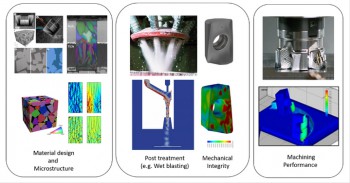
The AIM-NEXT project arises from the common need of European academy and industry to educate and train the next generation of experts in the field of “Sustainable design of material solutions for engineering applications”. In this regard, the need to Accelerate the design and Insertion of hard Material tools and components, m...Adapting Manufacturing Processes for Energy Savings (AMAPES)
Other InternationalPartner
The objective of reducing energy consumption in the manufacturing process is integral to the vision of Industry 4.0, which promotes the shift towards smart manufacturing. This involves utilising technologies in data monitoring and artificial intelligence to optimise processes and enhance efficiency, reducing the energy used to produce parts with...Adesivos de líquidos iónicos personalizáveis para a administração transdérmica e não invasiva de vacinas de ARN mensageiro (NEEDlFREE)
Fundação para a Ciência e a TecnologiaCoordinator
All in One: Harvesting of waste heat with solid thermal battery (Heat2Battery)

European ComissionPartner
Materials that convert and store energy are essential for advancing new energy technologies and driving economic growth. Funded by the European Innovation Council, the Heat2Battery project represents a significant breakthrough by integrating heat harvesting and storage into a single device. Unlike traditional thermoelectric generators, ...Alternative routes for basic chemicals production using hydrogen as feedstock (ALCHEMHY )

European ComissionPartner
ALCHEMHY aims to develop a set of innovative electrified processes to produce platform chemicals, particularly ammonia, i.e., a Magnetic-Heated Sorption-Enhanced Reactor (MSER) and Direct ElectroSynthesis of Ammonia (DESA); and methanol, i.e., a Small-Flexible Methanol Reactor (SFMR) and a Plasma-Catalytic Hydrogenation process (PCH). To this en...Ammonia as a Sustainable Fuel in Solid Oxide Fuel Cells-based Systems for Transportation and Energy (AMMORE)
Fundação para a Ciência e a TecnologiaPartner
The overall objective of AMMORE project is to develop a standardized modular and multipurpose kW-class energy generation unit (EGU) based on an intermediate temperature solid oxide fuel cell (SOFC) stack powered by ammonia. A key goal is to position ammonia as a sustainable, efficient, and economically viable fuel for SOFC-based systems.Band engineering in 2D-ferroelectric materials and heterostructures for photoelectrochemical water splitting (2DFerroPEC)
Fundação para a Ciência e a TecnologiaCoordinator
Addressing 21st-century challenges of energy crisis and environmental pollution, this project focuses on advancing solar-driven water splitting. The project aims to explore novel 2D-ferroelectric materials and heterostructures to enhance charge separation and improve water splitting efficiency. Success in this project contributes to sustainable ...Better Biobased Polymer Network (B3PO)
European ComissionPartner
The chemical industry faces increasing pressure to reduce emissions and adopt sustainable alternatives. Replacing petroleum-based reactions with new, bio-based pathways will pave the way towards a circular industry. Supported by the Marie Skłodowska-Curie Actions programme, the B3PO project aims to develop new methods for the synthesis of polyme...Bioengenharia de materiais vivos compostos por células imunes para imunoterapia do cancro do pâncreas (ALIVE)
Fundação para a Ciência e a TecnologiaCoordinator
Bioengenharia de modelos ósseos biomiméticos para o desenvolvimento de terapias anti-tumorais e regenerativas (ÉLPIS)
Other NationalCoordinator
Bioengineering of Biopolymers for the Biobased Degradation and Detection of Plastics and Plasticizers (2DEPLAST)
Industry NationalPartner
The 2-DEPLAST project proposes the bioengineering of innovative, bifunctional biopolymers for the sustainable degradation and efficient detection of plastic waste, which poses a major threat to ocean health. A multidisciplinary research team, bringing together expertise in microbial genetic engineering, metabolomics, toxicology, polymer chemistr...Bioinspired strategies for new sustainable marine antifouling technologies (ECOAT)
Fundação para a Ciência e a TecnologiaPartner
Biomateriais Supramoleculares Quimicamente Programáveis e Dinâmicos para Regeneração Neuronal (SUPRANEURO)
Fundação para a Ciência e a TecnologiaCoordinator
Biosensor à base de IgY para a deteção de microrganismos (SPY)
Other NationalCoordinator
As doenças causadas por agentes patogénicos transmitidos pela água e por alimentos representam uma grave ameaça à saúde pública global, resultando em milhões de casos de infeção e mortes anualmente, bem como prejuízos económicos significativos. Entre os principais agentes patogénicos encontram-se as bactérias Salmonella spp. e Legionella spp., r...BIOsystem for the Sustainable Recycling of Marine Plastic Waste (BIOPLASTAR)
European ComissionPartner
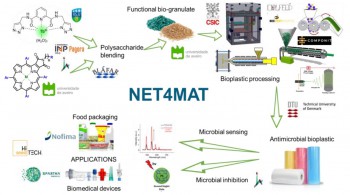
The BIOPLASTAR project aims to: (1) create proof of concept of a biosystem for recycling marine (micro)plastics; (2) valorize (micro)plastic waste; (3) disseminate the project, as well as results and innovation(s) generated, through communication actions for the general public, economic and governmental agents, whose mission is focused on the sea.Building knowledge and tools for the sustainable microbial fighting through sensing and responsive polysaccharide-based materials (NET4MAT)