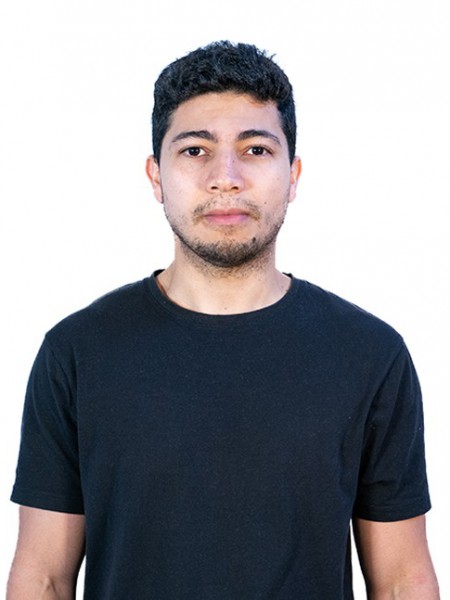
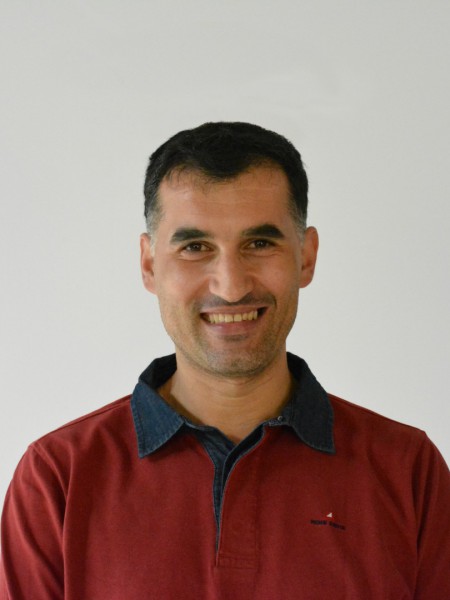





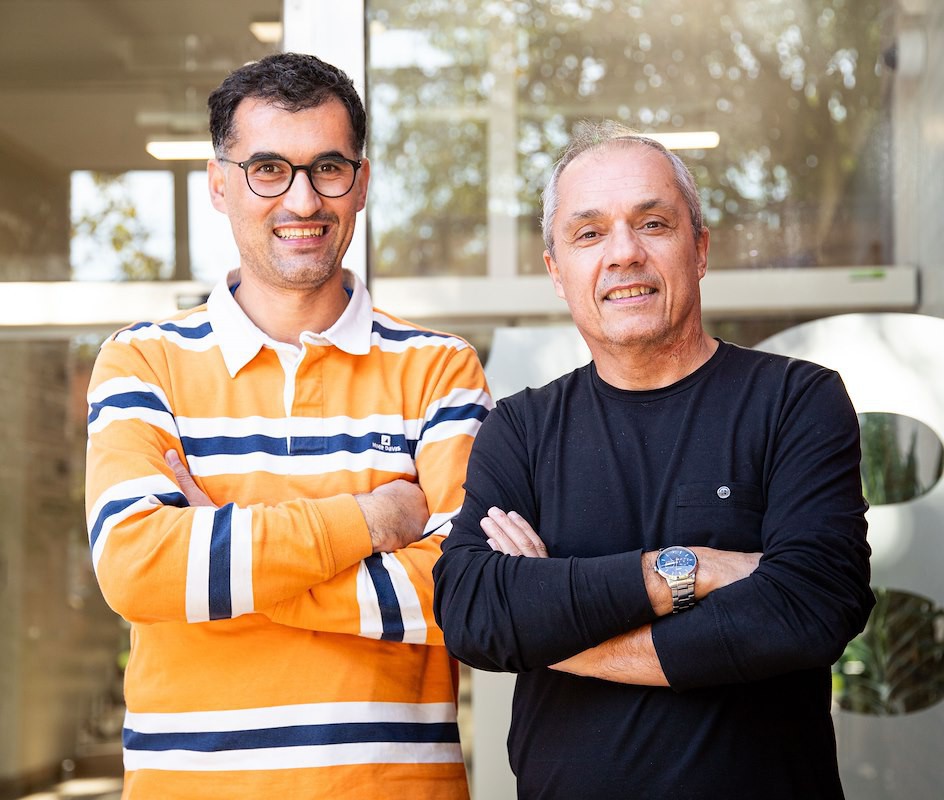
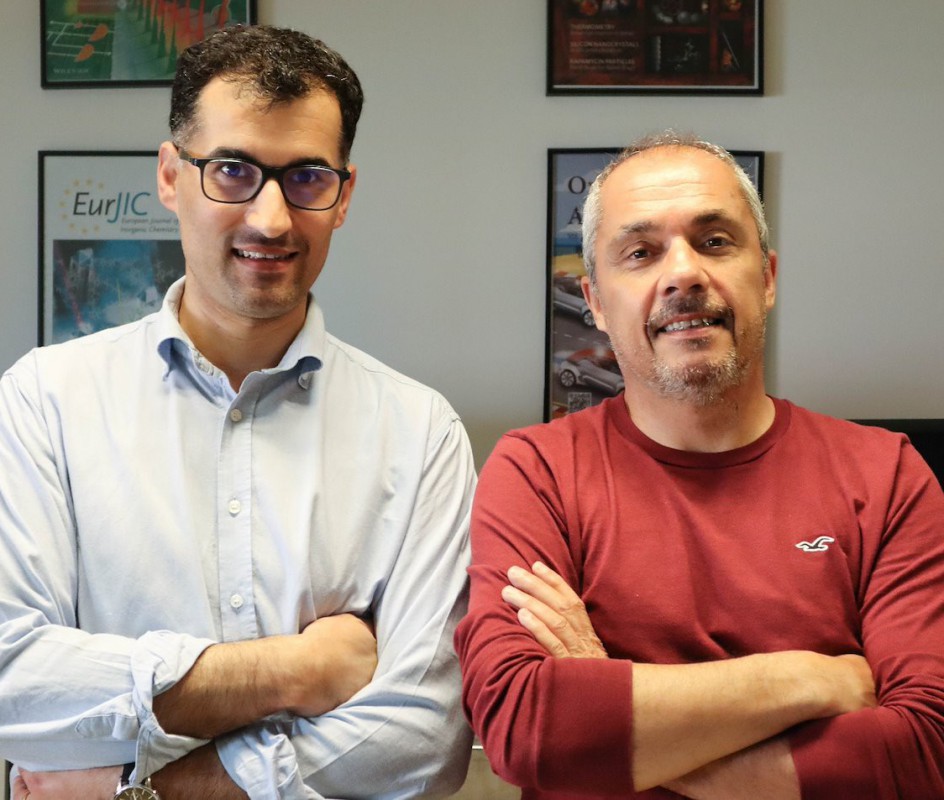
Carlos Brites

Associate Professor

Short CV

Carlos D.S. Brites

Associate Professor, Department of Physics, University of Aveiro, Portugal
Researcher, CICECO – Aveiro Institute of Materials

Born: May 1981, Nazaré, Portugal


Academic and Professional Career

2024–presentAssociate Professor, Department of Physics, University of Aveiro, Portugal
Leads research in functional luminescent materials, optical nanothermometry, and molecular logic devices. Serves as Course Director of Computational Engineering, promoting interdisciplinary education bridging physics, materials science, and data-driven modeling. Coordinates international collaborations under projects such as LogicALL, REVEAL, and MOFLOGIC, focused on sustainable molecular computing and smart photonic materials.

2019–2024Assistant Professor, Department of Physics, University of Aveiro, Portugal
Conducted interdisciplinary research on photonic molecular logic and luminescent thermometry; supervised PhD and MSc students; coordinated and participated in national and international projects.

2017–2019Researcher, CICECO / Department of Physics, University of Aveiro, Portugal
Focused on functional luminescent materials and energy-transfer modeling.

2013–2017Postdoctoral Fellow, CICECO (University of Aveiro, Portugal) & Instituto de Ciencia de Materiales de Aragón – ICMA (University of Zaragoza, Spain)
FCT Grant (SFRH/BPD/89003/2012): “Molecular Luminescent Thermometers”.
Developed self-referenced luminescent thermometers based on trivalent lanthanide ions and nanostructured hosts.

2007–2012Ph.D. in Physics, University of Aveiro (Portugal) & University of Zaragoza (Spain)
Thesis: “Self-Referencing Thermometry at the Nanoscale”
Joint doctoral program between CICECO and ICMA, pioneering luminescence-based nanothermometry.

2004–2007M.Sc. in Optoelectronics and Lasers, Faculty of Sciences, University of Porto, Portugal
Dissertation: “Integrated Optics Beam Combiners for Astronomical Interferometry”

1999–2004B.Sc. in Physics and Chemistry, University of Aveiro, Portugal


Research Interests

Functional luminescent materials • Optical nanothermometry • Molecular logic and photonic computing • Energy-transfer modeling • Data-assisted materials design • Artificial intelligence in spectroscopy and materials science • Hybrid organic–inorganic systems • Sustainable photonic technologies

Scientific Interests

My research focuses on the design and understanding of functional luminescent materials and their application in molecular computing, optical sensing, and nanoscale thermo-optical characterization. The overarching goal is to harness and manipulate energy-transfer processes and photonic responses in molecular and hybrid systems to create novel functionalities in smart materials and devices.

  • Molecular logics actuated by physical inputs
    Design and demonstration of molecular devices performing logic operations using physical stimuli—such as temperature, UV radiation, or magnetic field—as inputs. These systems aim at miniaturizing computation while promoting sustainable, photonic-based molecular architectures.

  • Luminescent materials based on trivalent lanthanide ions
    Synthesis and modeling of Ln³⁺-based compounds exhibiting high quantum efficiency and selective emission. These materials are explored for optoelectronic applications, sensing, and molecular photonic logic devices.

  • Luminescent materials as nanoscale thermal probes
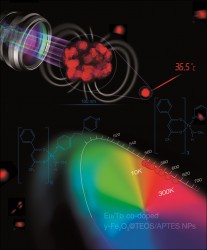
    Development of ratiometric luminescence thermometry methodologies enabling precise temperature measurements in complex, dynamic, or biological environments. These probes combine high sensitivity, spatial resolution, and photochemical robustness.

  • Luminescence thermometry as a nanoscale tool for materials characterization
    Use of luminescence thermometry as a diagnostic technique to probe non-radiative relaxation, energy-transfer pathways, and local thermal properties. This approach provides fundamental insights into thermo-optical processes and supports the rational design of next-generation functional materials.


Research Group

PHANTOM-G – Photonic Hybrids and Nanomaterials Group
http://hybrids.web.ua.pt
new_logo_phantho.png

PHANTOM-G is a multidisciplinary research group within CICECO – Aveiro Institute of Materials, working at the interface of materials science, photonics, and nanotechnology.
The group investigates light–matter interactions in hybrid organic–inorganic systems and develops luminescent materials for optical sensing, molecular logic, luminescence thermometry, and smart photonic devices.
Its activities span materials synthesis, modeling, and photophysical characterization, bridging fundamental science with sustainable technological applications.

Main present collaborators

My scientific activity evolves within an extensive international network involving leading groups across Europe and South America. These collaborations are part of projects combining luminescent materials, molecular photonics, nanoscale thermometry, and AI-assisted modeling, aiming at photonic molecular computing and rational design of hybrid materials.
The main partners span Portugal, Spain, France, Germany, and Argentina, ensuring an interdisciplinary approach that integrates chemical synthesis, photophysical characterization, computational modeling, and device innovation.


University of Aveiro (Portugal)

  • Luís D. Carlos — Development of luminescence thermometry methodologies and photonic molecular logic devices based on Ln³⁺ ions; joint supervision and scientific co-direction within CICECO/PHANTOM-G.

  • Rute A. S. FerreiraSynthesis and engineering of hybrid organic–inorganic materials; VIS–NIR spectroscopy and integration of luminescent materials into functional photonic devices.


University of Zaragoza (Spain)

  • Ángel MillánCoordination chemistry and design of metal clusters and SMMs with photonic and magnetic functionalities; light–magnetic field coupling and relaxation studies.

  • Rafael Piñol — Research in nanomagnetism and hybrid multifunctional materials; applications in magneto-optics, hybrid devices, and Ln³⁺-based thermal bioimaging.


Autonomous University of Madrid (Spain)

  • Erving Ximendes — Research in optical nanothermometry and luminescent probes in biological media, focusing on energy-transfer mechanisms, nonlinear photonic responses, and spectral modeling for in vivo thermometry.

  • Riccardo MarinSynthesis and characterization of rare-earth and semiconductor-doped nanoparticles; study of upconversion processes, infrared bioimaging, and multimodal nanostructures for sensing applications.


University of Nantes (France)

  • Hélène BraultSynthesis of luminescent coordination polymers and MOFs; development of MOF-based optical thermometers, photophysical characterization (UV–Vis and luminescence), and single-crystal structure determination.


Heinrich Heine University Düsseldorf (Germany)

  • Markus SutaModeling and spectroscopy of inorganic luminescent materials; study of energy-transfer processes, upconversion, and temperature-dependent emission; application of AI and theoretical methods to predict optical properties.


Centro Atómico Bariloche – National Atomic Energy Commission (Argentina)

  • Eduardo D. MartínezSynthesis of transition-metal complexes and luminescent hybrid materials; investigation of energy-transfer mechanisms and design of robust optical thermal probes for sensing and diagnostics.


Cross-cutting themes: nanothermometry (ratiometric and primary), reprogrammable molecular logic devices, Ln³⁺-based hybrid luminescent materials, magneto-optical systems, and modeling/AI for inverse materials design.

Other Projects

Ongoing Supervisions

Projects

Publications

Real-Time Intracellular Temperature Imaging Using Lanthanide Bearing Polymeric Micelles

Pinol, R; Zeler, J; Brites, CDS; Gu, YY; Tellez, P; Neto, ANC; da Silva, TE; Moreno-Loshuertos, R; Fernandez-Silva, P; Gallego, AI; Martinez-Lostao, L; Martinez, A; Carlos, LD; Millan, A
2020, NANO LETTERS, 20, 9, 6466-6472.
ISBN: 1530-6992

Decoding a Percolation Phase Transition of Water at similar to 330 K with a Nanoparticle Ruler

Brites, CDS; Zhuang, BL; Debasu, ML; Ding, D; Qin, X; Maturi, FE; Lim, WWY; Soh, D; Rocha, J; Yi, ZG; Liu, XG; Carlos, LD
2020, JOURNAL OF PHYSICAL CHEMISTRY LETTERS, 11, 16, 6704-6711.

Exploring Single-Nanoparticle Dynamics at High Temperature by Optical Tweezers

Lu, DS; Labrador-Paez, L; Ortiz-Rivero, E; Frades, P; Antoniak, MA; Wawrzynczyk, D; Nyk, M; Brites, CDS; Carlos, LD; Sole, JAG; Haro-Gonzalez, P; Jaque, D
2020, NANO LETTERS, 20, 11, 8024-8031.
ISBN: 1530-6992

Decoding a Percolation Phase Transition of water at ~330 K with a Nanoparticle Ruler

C. D. Brites, B. Zhuang, M. L. Debasu, D. Ding, X. Qin, F. E. Maturi, W. W. Y. Lim, D. W. Soh, J. Rocha, Z. Yi, X. Liu, L. D. Carlos
2020, The Journal of Physical Chemistry Letters.

Self-Calibrated Double Luminescent Thermometers Through Upconverting Nanoparticles

Brites, CDS; Martinez, ED; Urbano, RR; Rettori, C; Carlos, LD
2019, FRONTIERS IN CHEMISTRY, 7.

Lanthanide-Based Thermometers: At the Cutting-Edge of Luminescence Thermometry

Brites, CDS; Balabhadra, S; Carlos, LD
2019, ADVANCED OPTICAL MATERIALS, 7, 5.

Upconversion Nanocomposite Materials With Designed Thermal Response for Optoelectronic Devices

Martinez, ED; Brites, CDS; Carlos, LD; Urbano, RR; Rettori, C
2019, FRONTIERS IN CHEMISTRY, 7.

Electrochromic Switch Devices Mixing Small- and Large-Sized Upconverting Nanocrystals

Martinez, ED; Brites, CDS; Carlos, LD; Garcia-Flores, AF; Urbano, RR; Rettori, C
2019, ADVANCED FUNCTIONAL MATERIALS, 29, 8.
ISBN: 1616-3028

Bandgap Engineering and Excitation Energy Alteration to Manage Luminescence Thermometer Performance. The Case of Sr-2(Ge,Si)O-4:Pr3+

Sojka, M; Ramalho, JFCB; Brites, CDS; Fiaczyk, K; Carlos, LD; Zych, E
2019, ADVANCED OPTICAL MATERIALS, 7, 23.

Thermal Properties of Lipid Bilayers Determined Using Upconversion Nanothermometry

Bastos, ARN; Brites, CDS; Rojas-Gutierrez, PA; DeWolf, C; Ferreira, RAS; Capobianco, JA; Carlos, LD
2019, ADVANCED FUNCTIONAL MATERIALS, 29, 48.
ISBN: 1616-3028

Patents

We use cookies for marketing activities and to offer you a better experience. By clicking “Accept Cookies” you agree with our cookie policy. Read about how we use cookies by clicking "Privacy and Cookie Policy".