







Ongoing Supervisions



Projects
Lanthanide-based Molecular Information Processing Systems (LUMINOUS)
PartnerFundação para a Ciência e a Tecnologia
The LUMINOUS project is investigating molecular materials that use lanthanide ions for information processing. This innovative approach can overcome the current limitations of silicon technology. The project develops logic gates and cutting-edge solutions that will be integrated into hybrid computing systems. The project could have an impact on ...The ShApe of Water: Part II - Unveiling the Hidden Architecture (Aqua II)
CoordinatorFundação para a Ciência e a Tecnologia
THE SHAPE OF WATER: PART II - UNVEILING THE HIDDEN ARCHITECTURE WATER puts forward and intends to develop a unique and disruptive approach (including theoretical modeling and computer simulations) to investigate the intricate relationship among temperature, pH, surface density charge, and Brownian velocity in a range of differently sized upconve...A functional device for sub-micron temperature mapping under magnetic field (EXPL/CTM-NAN/0295/2012 )
PartnerFundação para a Ciência e a Tecnologia
nanothermometer luminescent materials nanomagnetism functional deviceBio-inspired deposition of a biomineral on biopolymers and on biopolymer/siloxane hybrids for biomedical applications (PTDC/CTM-BPC/112774/2009)
Local CoordinatorFundação para a Ciência e a Tecnologia
organic/inorganic biohybrids biomineralization calcium carbonate biomimetismCentre for Research in Ceramics and Composite Materials - CICECO (LA0011: 2002-2010) (UI CICECO (UI 600/02) + POCI/LA11/2005)
PartnerFundação para a Ciência e a Tecnologia
Centre for Research in Ceramics and Composite Materials - CICECO (LA0011: 2011-2012) (PEst-C/CTM/LA0011/2011)
PartnerFundação para a Ciência e a Tecnologia
Centre for Research in Ceramics and Composite Materials - CICECO (LA0011: 2013-2014) (PEst-C/CTM/LA0011/2013)
PartnerFundação para a Ciência e a Tecnologia - R&D Unit Pluriannual funding
Centre for Research in Ceramics and Composite Materials - CICECO - INCENTIVO 2013 (INCENTIVO/CTM/LA0011/2013)
PartnerFundação para a Ciência e a Tecnologia - R&D Unit Pluriannual funding
CICECO - Aveiro Institute of Materials (UID/CTM/50011/2013)
PartnerFundação para a Ciência e a Tecnologia - R&D Unit Pluriannual funding
Materials to be developed span from ceramics and inorganic materials to soft matter, biopolymers and organic-inorganic hybrids. They will be ‘right-size’ materials, prepared and processed at the appropriate length scale, or hierarchically structured, often multifuncional. Examples of the applications we wish to pursue are:- Green pho...CICECO - Aveiro Institute of Materials (UID/CTM/50011/2019)
PartnerFundação para a Ciência e a Tecnologia - R&D Unit Pluriannual funding
Materials to be developed span from ceramics and inorganic materials to soft matter, biopolymers and organic-inorganic hybrids. They will be ‘right-size’ materials, prepared and processed at the appropriate length scale, or hierarchically structured, often multifuncional. Examples of the applications we wish to pursue are: - Green ...CICECO - Aveiro Institute of Materials (UID/CTM/50011/2013)
PartnerFundação para a Ciência e a Tecnologia - R&D Unit Pluriannual funding
Materials to be developed span from ceramics and inorganic materials to soft matter, biopolymers and organic-inorganic hybrids. They will be ‘right-size’ materials, prepared and processed at the appropriate length scale, or hierarchically structured, often multifuncional. Examples of the applications we wish to pursue are:- Green pho...Controlled chemical modification of polysaccharides for the development of novel materials (PTDC/QUI/68472/2006 )
PartnerFundação para a Ciência e a Tecnologia
Polysaccharides Chemical modification Composites Functional materialsControlling the length scale through "Chimie Douce": from inorganic functional materials to organic-inorganic hybrids (POCTI/CTM/46780/2002)
PartnerFundação para a Ciência e a Tecnologia
Functional Inorganic Materials Chimie Douce Organic-Inorganic Hybrids LuminescenceDeveloping Efficient Heating-Sensing Single Nanoplatforms For Intracellular Imaging And Controlled Local Hyperthermia (NanoHeatControl)
PartnerFundação para a Ciência e a Tecnologia
Development of remotely controlled local cooling sources, towards an applied nanothermodynamics (CoolPoint)
PartnerFundação para a Ciência e a Tecnologia
We propose to prepare and develop micro- and nanometer-structured materials acting as local cooling sources operating at near room temperature, i. e., materials able to locally absorb heat and in which the absorption process is triggered and controlled from a distance. We also propose to develop a proof of concept device able to manipulate heat ...Díodos emissores de luz (LEDs) branca, inovadores, sintonizáveis e sustentáveis (WINLEDs)
PartnerFundação para a Ciência e a Tecnologia
EJD-FUNMAT - European Joint Doctorate in Functional Materials Research (EJD-FUNMAT)
Local CoordinatorEuropean Comission
EJD-FunMat is a European Joint Doctoral programme in the field of functional materials research.EJD-FunMat is embedded in an existing research network, with previous experience in co-tutelle doctorates , but the project will add new major elements, with the strategic aim of becoming a permanent reference European Joint Doctoral Schoo...ENERGY TRANSFER FROM ELECTROLUMINESCENT POLYMERS TO PHOSPHORESCENT DOPANTS (POCTI/CTM/40063/2001)
Local CoordinatorFundação para a Ciência e a Tecnologia
Polymer LEDs Electroluminescent polymers Phosphorescent dopants Energy transferFUNctional GLASS (FUNGLASS)

Local CoordinatorEuropean Comission
The scientific objective of the project FUNGLASS- FUNctional GLASS integration in photonic devices and components- addresses one of the most crucial challenges in research and innovation which lies in the design and manufacturing of optical components and systems. Among the materials used in photonic devices, glasses play a central role: they ar...Harvesting the energy of the sun for a sustainable future (CENTRO-07-ST24-FEDER-002032)
PartnerOther National
High-Performance Plastic Fiber Luminescent Solar Concentrators For Flexible Waveguiding Photovoltaics (SOLARFLEX)
PartnerFundação para a Ciência e a Tecnologia
HOTsPOT - Novel upconversion nanoparticles for multimodal therapy of melanoma: pHOtothermal Therapy, PhOtodynamic therapy and chemoTherapy (HOTsPOT)
PartnerFundação para a Ciência e a Tecnologia
MOTIVATION: Melanoma is the most aggressive form of skin cancer and one of the most challenging malignancies to treat with a steeply rising incidence and a poor prognosis in advanced stages. Conventional clinical treatment of melanoma often fails in tumor complete eradication, due to the low response rates to single therapies, chemotherapy side ...Incentive - LA 11 - 2014 (INCENTIVO/CTM/LA0011/2014)
PartnerFundação para a Ciência e a Tecnologia - R&D Unit Pluriannual funding
Luminescent electrochromic devices incorporating organic/inorganic (bio)hybrid electrolytes (LUMECD)
Local CoordinatorFundação para a Ciência e a Tecnologia
janelas inteligentes luminescentes; electrólitos (bio)híbridos; sais, complexos e líquidos iónicos de lantanídeos; dynamic solar control in buildings in cold climateLuminescent Lanthanide Silicate Synthesis Using Lanthanide Complexes as Structure Directing Agents (POCI/CTM/58863/2004)
PartnerFundação para a Ciência e a Tecnologia
Functional Inorganic Materials Luminescence Microporous Silicates Lanthanide ComplexesLUMINET - European Network on Luminescent Materials (LUMINET)
Local CoordinatorEuropean Comission
Luminescent materials have entered our every day life. They can be found in lamps, traffic lights, computer screens, cell phones, in labels for goods, are used in medical applications, airport security check devices and many more. Indeed, they have become indispensable and much of societies convenience and welfare depend on them. No wonder that ...Magnetostructural Modulation in Peroyskite Derivatives With Strone Electron Correlations (POCTI/CTM/35462/1999)
PartnerFundação para a Ciência e a Tecnologia
Ceramics Thin films Magnetoresistance Local probe spectroscopiesMateriais micro e mesoestruturados para processos baseados em imunocitoquímica (Transnational cooperation - Convénio FCT/CAPES (4.4.1.00 CAPES, 2010))
CoordinatorFundação para a Ciência e a Tecnologia
Modeling visible-emitting lanthanide complexes for OLED-RGB applications: a computational-experimental approach (PTDC/CTM-NAN/112168/2009)
PartnerFundação para a Ciência e a Tecnologia
theoretical modeling lanthanide luminescence intramolecular energy transfer organic-inorganic di-ureasil hybridsMolecular logic devices and computing based on luminescent materials actuated by physical inputs (LogicALL)
PartnerFundação para a Ciência e a Tecnologia
Multifunctional Magneto-Optical Nanoparticles (Ação integrada Portugal/França Programa Pessoa - 4336/40773PE)
CoordinatorFundação para a Ciência e a Tecnologia
Nano-sized Functional Metal-Organic Frameworks Based on Lanthanide Polyphosphonates (PTDC/QUI-QUI/098098/2008)
PartnerFundação para a Ciência e a Tecnologia
Metal-Organic Frameworks Crystal Engineering Photoluminescent thin films Heterogeneous CatalystsNanochemistry of magnetic/luminescent composites for in vitro medical diagnosis applications (PTDC/QUI/67712/2006)
PartnerFundação para a Ciência e a Tecnologia
Nanoparticles Nanocomposites Magnetism/Luminescence Antibodies bioconjugationNanoheaters and nanothermometers playing together: towards applications in Brownian motion and hyperthermia (nanoHYperTHerm)
CoordinatorFundação para a Ciência e a Tecnologia
Nanotermómetros; Nanoaquecedores; Hipertermia; Upconverting nanoparticlesNanomateriais multifuncionais com propriedades ópticas e magnéticas (Acção integrada Luso-Espanhola E-131/10)
CoordinatorOther National
Nanoparticles - based 2D thermal bioimaging technologies - NanoTBTech (NanoTBTech)
CoordinatorEuropean Comission
Temperature measurements are crucial in countless technological developments, accounting for 80% of the sensor market throughout the world. The pitfalls of temperature readouts at the biomedical battleground are mostly represented by the currently achievable spatial resolution. To address key issues, such as intracellular temperature fluctuation...Nanostructured Photoluminescent rare-earth nanotubes and microporous silicates (PTDC/CTM/73243/2006)
PartnerFundação para a Ciência e a Tecnologia
Nanotubes Microporous Rare Earth PhotoluminescenceNovel Multidimensional Lanthanide-Organic Frameworks: Hydrothermal Synthesis, Structural Characterisation and Applications (POCI/QUI/58377/2004)
PartnerFundação para a Ciência e a Tecnologia
Crystal Engineering Lanthanide-Organic Frameworks Coordination Polymers Functional MaterialsOptical waveguide lasers based on hybrid sol-gel derived materials doped with lanthanide ions (POCTI/CTM/42478/2001)
Local CoordinatorFundação para a Ciência e a Tecnologia
Integrated Optics lasers hybrid sol-gel optical waveguidesOrganic-inorganic hybrids with enhanced light-emitting properties for the new generation of optical communications (PTDC/CTM/101324/2008)
CoordinatorFundação para a Ciência e a Tecnologia
Organic-inorganic hybrids Light emitting devices Optical filtering Optical amplificationPolyoxometalates: from discrete clusters to networks and materials (POCI/QUI/58887/2004)
PartnerFundação para a Ciência e a Tecnologia
Polyoxometalates Synthesis and structure Luminescence CatalysisRational design of hybrid organic-inorganic interfaces: the next step towards advanced functional materials (HINT)
Local CoordinatorEuropean Comission
Hybrid organic-inorganic (HOI) materials synthesized using soft inorganic chemistry allow a combination of organic and inorganic units at molecular/nanoscale level, thereby opening access to a wide spectrum of multifunctionality not possible with traditional concepts of materials science. These innovative multifunctional materials will have a ma...Relação entre as propriedades de fotoluminescência e a estrutura em híbridos orgânicos/inorgânicos com aplicações ópticas (POCI/V.5/A0067/2005)
CoordinatorFundação para a Ciência e a Tecnologia
Self-patternable organic/inorganic hybrids for low cost integrated optics devices (PTDC/CTM/72093/2006)
PartnerFundação para a Ciência e a Tecnologia
Organic-inorganic hybrids Luminescence Optical waveguides Low cost integrated opticsSGH : Smart Green Homes (Smart Green Homes)
PartnerIndustry National
The Smart Green Homes (SGH) Project aims to develop integrated product and technology solutions for the households, raising standards of comfort, safety and user satisfaction to a new level and, at the same time, to respond to the problems of sustainability of the Planet, increasing the energy efficiency and reducing the emission of gaseous poll...Silsesquioxanes bridged organic-inorganic hybrids with thiourea cross-linkages (Acção Integrada Luso-Francesa, PAUILF – 2013 (TC-11-13))
PartnerOther National
Solar-Powered Smart Windows for Sustainable Buildings (SOLPOWINS)
PartnerFundação para a Ciência e a Tecnologia
Smart Windows Electrochromic and Thermotropic Devices Photovoltaics and Solar Concentrators Integrated SystemsSusPhotoSolutions - Soluções Fotovoltaicas Sustentáveis (SUSPHOTOSOLUTIONS)
CoordinatorOther National
O programa tem como objetivo desenvolver soluções fotovoltaicas sustentáveis: células solares baseadas em materiais não-críticos e concentradores solares luminescentes baseados em R-ficoeritrina, mimetizando a fotossíntese. A transformação de eletricidade verde em hidrogénio permite mitigar a intermitência da energia solar e a análise do ciclo d...The European upconversion network - from the design of photon-upconverting nanomaterials to biomedical applications (The European upconversion network)
Local CoordinatorEuropean Comission
Photoluminescent upconverting nanomaterials (UCNMs) are lanthanide-doped nanocrystals that emit visible light under near-infrared excitation. The unique anti-Stokes emission enables background-free luminescent detection, which is essential for many diagnostic applications, bioimaging and chemical sensing. UCNMs are highly photostable and display...The shape of water: Nanothermometry as a tool to unveil the structure of liquid water and water-based nanofluids (THE SHAPE OF WATER )
CoordinatorFundação para a Ciência e a Tecnologia
Nanoparticles Nanothermometry Water local structure UpconversionThermometry and Photoacoustic-Imaging Outstanding Nanoprobes (TEMPTATION)
CoordinatorEuropean Comission
This project addresses the quest of new materials and approaches that nanotechnology requires to solve the current limitations of medicine. The potential to externally track and image organs and the potential presence and evolution of diseases by using light becomes a reality thanks to the use of especially tailored biocompatible nanoplatforms. ...Water Nanodrops in Microporous and Inorganic-Organic Hybrid Materials (PTDC/QUI/65805/2006)
PartnerFundação para a Ciência e a Tecnologia
Water Clusters Microporous materials Organic-inorganic hybrids NanostructuresPublications
From Upconversion Nanoparticles to Proteins: Probing Hydration-Water Density Fluctuations by Luminescence Thermometry
Ramon S. Raposo Filho; Yongwei Guo; Fernando E. Maturi; Carlos D. S. Brites; Luís D. Carlos
2026, Accounts of Chemical Research.
Photothermal Heating and Real-Time In Situ Luminescent Thermometry with Iron Oxide Core-Silica Shell Nano-Objects
Sater, FA; Félix, G; Sene, S; Gunatilake, UB; Bouvet, B; Pelluau, T; Oliviero, E; Neto, ANC; Carlos, LD; Albela, B; Bonneviot, L; Guari, Y; Larionova, J
2025, SMALL.
Real-Time Temperature Monitoring with Cr3+-Based Hybrid Formate Perovskites: Insights into the Relation Between Chemical Composition and Thermometric Performance
Kabanski, A; Ptak, M; Carlos, LD; Stefanska, D
2025, ADVANCED OPTICAL MATERIALS, 13, 25.
Combining materials design and deep learning: AI-enhanced luminescence thermometry with a novel Eu3+/Tb3+ polymeric coordination compound
Polikovskiy, TA; Gontcharenko, VE; Korshunov, VM; Metlin, MT; Metlina, DA; Samsonov, SV; Belousov, YA; Brites, CDS; Carlos, LD; Taydakov, IV
2025, MATERIALS CHEMISTRY FRONTIERS, 9, 23, 3443-3459.
An air-stable high-performance single-molecule magnet operating as a luminescent thermometer below its blocking temperature
Corredoira-Vazquez, J; Gonzalez-Barreira, C; Fondo, M; Garcia-Deibe, AM; Sanmartin-Matalobos, J; Gómez-Coca, S; Ruiz, E; Brites, CDS; Carlos, LD
2025, INORGANIC CHEMISTRY FRONTIERS, 12, 18, 5506-5516.
Insights into quantum cutting and downshifting contributions to near-infrared YbIII luminescence in 1D coordination polymers
Bispo-Jr, AG; Saraiva, LF; Neto, ANC; Coelho, SFN; Mazali, IO; Carlos, LD; Sigoli, FA
2025, JOURNAL OF MATERIALS CHEMISTRY C, 13, 45, 22616-22624.
Recent advances in conjugated polymer lanthanide-doped upconversion nanoparticles and their biological applications
Silva, GD; Maturi, FE; Carlos, LD; Ferrari, JL
2025, JOURNAL OF MATERIALS CHEMISTRY C, 13, 40, 20424-20443.
Thermal diffusivity of nanofluids: A simplified temperature oscillation approach
Raposo, RS; Brites, CDS; He, RH; Liu, XG; Carlos, LD
2025, PHYSICS OF FLUIDS, 37, 2.
Spectroscopic study of the Tb3+→Eu3+ energy transfer process in TbAl3(BO3)4 doped with 1 % mol of Eu3+ in the 12-310 K temperature range
Ceccon, L; Ruggieri, S; Bettinelli, M; Carlos, LD; Brites, CDS; Neto, ANC; Piccinelli, F
2025, CERAMICS INTERNATIONAL, 51, 27, 53426-53431.
Tuning Water Density Fluctuations with Surface-Charged Colloidal Nanoparticles Probed by Luminescence
Raposo, RS; Brites, CDS; Carlos, LD
2025, JOURNAL OF PHYSICAL CHEMISTRY LETTERS, 16, 45, 11683-11689.
Reinterpreting the Judd–Ofelt parameters based on recent theoretical advances
In Mikhail G. Brik and Alok M. Srivastava (Eds.), Luminescent materials: fundamentals and applications
Israel F. Costa, Lucca Blois, Albano N. Carneiro Neto, Ercules E.S. Teotonio, Hermi F. Brito, Luís D. Carlos, Maria Claudia F.C. Felinto, Renaldo T. Moura Jr., Ricardo L. Longo, Wagner M. Faustino, Oscar L. Malta
2023, 19-62, Berlin, De Gruyter.
ISBN:
9783110607857
An overview of luminescent primary thermometers
In J. J. Carvajal Martí and M. C. Pujol Baiges (Eds.), Luminescent Thermometry: Applications and Uses
Joana C. Martins, Carlos D.S. Brites, Albano N. Carneiro Neto, Rute A. S. Ferreira, Luís D. Carlos
2023, 105-152, Springer.
ISBN:
978-3-031-28515-8
Nanoscale Thermometry for Hyperthermia Applications
In Raluca Maria Fratila, Jesús Martínez De La Fuente (Eds.), Nanomaterials for Magnetic and Optical Hyperthermia Applications
Rafael Piñol, Carlos D.S. Brites, Nuno J. Silva, Luis D. Carlos, Angel Millán
2019, 139-172, Elsevier.
ISBN:
978-0-12-813928-8
Modeling intramolecular energy transfer in lanthanide chelates: A critical review and recent advances
In Jean-Claude G. Bünzli, Vitalij K. Pecharsky (Eds.), Handbook on the Physics and Chemistry of Rare Earths, volume 56
Albano N. Carneiro Neto, Ercules E.S. Teotonio, Gilberto F. de Sá, Hermi F. Brito, Janina Legendziewicz, Luís D. Carlos, Maria Claudia F.C. Felinto, Paula Gawryszewska, Renaldo T. Moura Jr., Ricardo L. Longo, Wagner M. Faustino, and Oscar L. Malta
2019, 55-162, Elsevier.
ISBN:
978-0-444-64299-8
Green photonics integrated circuits based on organic–inorganic hybrids
In Luciana Reyes Pires Kassab, Sidney J.L. Ribeiro and Raul Rangel-Rojo (Eds.), Nanocomposites for Photonic and Electronic Applications
Ana Bastos, Paulo S. André, Luís D. Carlos, Rute A. S. Ferreira
2019, 229-266, Springer.
ISBN:
978-0-12-818396-0
Optical Properties of Hybrid Organic–inorganic Materials and their Applications – Part II: Nonlinear Optics and Plasmonics
In R. Dronskowski, S. Kikkawa, A. Stein (Eds.), Handbook of Solid State Chemistry
S. Parola, B. Julián-López, L. D. Carlos, C. Sanchez
2017, 317-355, Weinheim, Germany, Wiley-VCH.
ISBN:
9783527325870
Optical Properties of Hybrid Organic–Inorganic Materials and their Applications – Part I: Luminescence and Photochromism
In R. Dronskowski, S. Kikkawa, and A. Stein (Eds.), Handbook of Solid State Chemistry
S. Parola, B. Julián-López, L. D. Carlos, C. Sanchez
2017, 275-316, Wiley-VCH.
ISBN:
978-3-527-32587-0
Hybrid Nanocomposites Based on Prussian Blue‐Type Nanoparticles Included into Polysaccharides Matrices
In M. Delville and A. Taubert (Eds.), Hybrid Organic‐Inorganic Interfaces: Towards Advanced Functional Materials
Long, J. , Quignard, F. , Guari, Y. , Guibal, E. , Vincent, T. , Guérin, C. , Carlos, L. D. and Larionova, J.
2017, 85-119, Wiley‐VCH Verlag.
ISBN:
978-3-527-34255-6
Chapter 8:Organic–Inorganic Hybrids Thermometry
In Luís Dias Carlos, Fernando Palacio (Eds.), Thermometry at the Nanoscale : Techniques and Selected Applications
Angel Millán, Luís D. Carlos, Carlos D. S. Brites, Nuno J. O. Silva, Rafael Piñol and Fernando Palacio
2016, 237-272, Royal Society of Chemistry.
ISBN:
978-1-84973-904-7
Chapter 281 – Lanthanides in Luminescent Thermometry
In Karl A. Gschneidner, Jean-Claude BŸnzli, Vitalij Pecharsky (Eds.), Handbook on the Physics and Chemistry of Rare Earths, Volume 49
C.D.S. Brites, A. Millán, L.D. Carlos
2016, 339-427, Elsevier B.V..
ISBN:
978-0-444-63851-9
Organic–Inorganic Hybrids for Lighting
In David Levy; Marcos Zayat (Eds.), The Sol-Gel Handbook: Synthesis, Characterization and Applications, 3-Volume Set
Vânia Teixeira Freitas, Rute Amorim S. Ferreira, Luis D. Carlos
2015, 883-910, Weinheim, Wiley-VCH.
ISBN:
978-3-527-33486-5
Organic/inorganic hybrids for light-emitting devices and integrated optics.
In L. Merhari (Eds.), Hybrid nanocomposites for nanotechnology: electronic, optical, magnetic and bio/medical applications
Carlos LD, Ferreira RAS
2009, 509-586, New York, Springer US.
ISBN:
978-0-387-72398-3
Hybrid Materials for Optical Applications
In Kickelbick G (Eds.), Hybrid Materials: Synthesis, Characterization, and Applications
Carlos LA, Ferreira RAS, De Zea Bermudez V
2006, 337-400, Weinheim, Germany, Wiley-VCH Verlag GmbH & Co. KGaA.
ISBN:
9783527312993
Luminescent Organic-Inorganic Nanohybrids
Encyclopedia of Nanoscience and Nanotechnology
Sá Ferreira RA, Carlos LD, De Zea Bermudez V
2004, 719-790, North Lewis Way, California, American Scientific Publishers.
ISBN:
1-58883-001-2
Fotoluminescência de Híbridos Orgânicos/Inorgânicos Reticulados por Grupos Ureia e Uretano
In Melo JS, Moreno MJ, Burrows HD,Gil MH (Eds.), Química de Polímeros
Carlos LD, De Zea Bermudez V
2004, 387-403, Imprensa da Universidade de Coimbra.
ISBN:
972-8704-22-4
Light emission from organic-inorganic Hybrids lacking activating centers
In Nalwa HS (Eds.), Handbook of Organic-Inorganic Hybrid Materials and Nanocomposites
Carlos L , Bermudez De Zea V, Sá Ferreira RA
2003, 1, 353-380, American Scientific Publishers.
ISBN:
1-58883-011-X
Patents
A dry active bio signal electrode with an hybrid organic-inorganic interface material
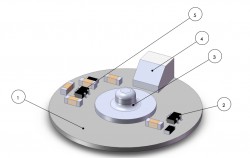
Devices InternationalNational
Cunha, João; Carlos, Luis; Ribeiro, David
The invention presented here is an bio signal electrode that is characterized by the use of an organic-inorganic sol gel derived hybrid skin to electrode interface material. Furthermore the incorporation of a buffering and signal processing circuit on a flexible PCB makes this electrode less prone to fluctuating skin to electrode interf...Luminescent organic/inorganic matrix, method for the production thereof and luminescent molecular thermometer based on said matrix
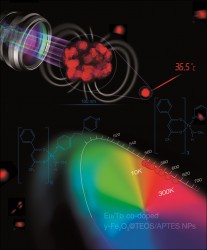
Devices International
Palacio, Fernando; Escolano, Angel; Silva, Nuno; Carlos, Luis ; Amaral, Vitor; Lima, Patricia; Brites, Carlos
Luminescent organic/inorganic matrix that contains tris(beta-diketonate) complexes of cations of two different lanthanides (europium and terbium). Optionally, the matrix comprises coated magnetic iron-oxide nanoparticles. The matrix may be composed of inorganic polymers based on siloxane that are derivatized with organic groups (for exa...